Key Takeaways
-
Avoid using high-pressure washers directly on pool cage screens as they can tear mesh and bend frames; use soft washing with low pressure and gentle cleaning solutions instead.
-
Florida's humid climate creates ideal conditions for mold, mildew, and algae on screens that can permanently stain and weaken materials; regular cleaning every 6-12 months prevents costly damage.
-
Professional pool cage cleaning includes detailed work on frames, tracks, corners, and seams where dirt and mold hide—areas DIY efforts commonly miss.
-
Harsh household chemicals can discolor aluminum frames and weaken screen fibers; professionals use eco-friendly, specially formulated solutions safe for your yard and pets.
-
Hiring inexperienced or unlicensed cleaners risks torn screens and incomplete jobs; choose local companies with proven track records, licensing, insurance, and positive customer reviews.
-
A clean pool cage maintains HOA compliance in Hillsborough County neighborhoods, improves home curb appeal, protects your outdoor investment, and extends the enclosure's lifespan by years.
Picture this: it’s a warm Brandon afternoon, and you’re ready to relax by the pool. But instead of enjoying the view, you’re staring through a screen covered in grime, streaks, and stubborn algae. Sound familiar? You’re not alone. Many homeowners across Hillsborough County struggle with the same problem, and often make things worse before they make them better.
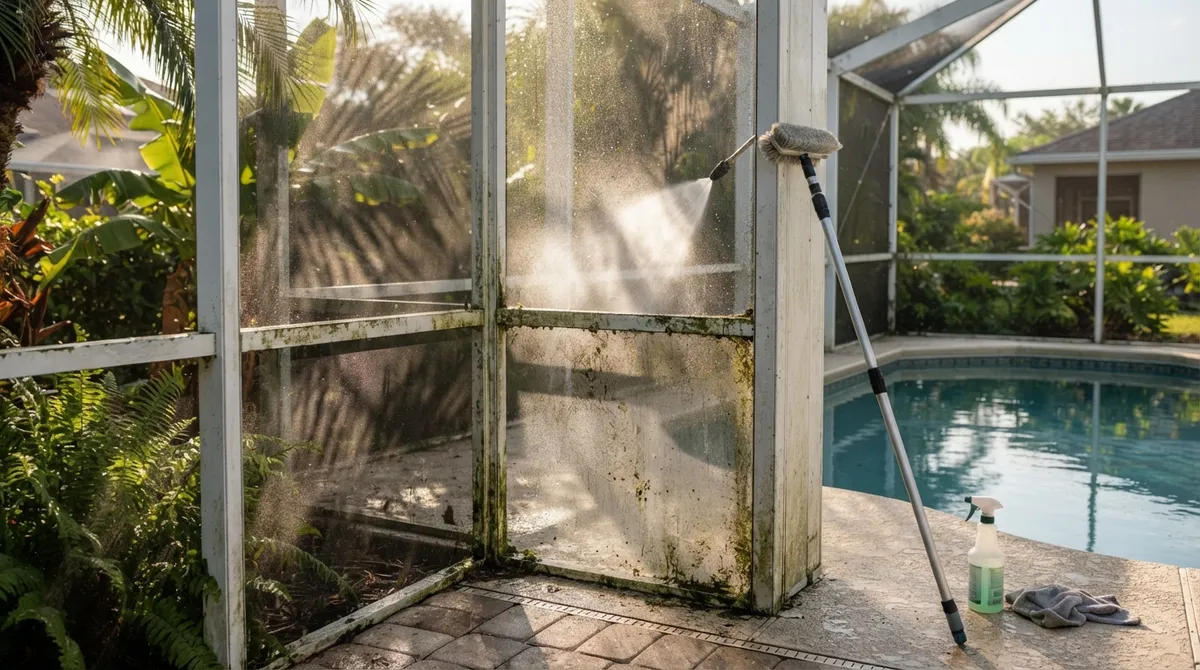
Pool cage cleaning Brandon FL homeowners trust isn’t just about looks. Florida’s humid climate, heavy pollen, and frequent rain create the perfect storm for mold, mildew, and algae buildup on screen enclosures. A clean pool cage protects your view, keeps bugs out, and adds years to your enclosure’s life. But there’s a right way and a wrong way to get it done.
In this guide, we’ll walk through five common mistakes homeowners make when cleaning their pool cages. We’ll also show you how professional help from Buckhorn Power Wash can save you time, money, and a whole lot of frustration. Let’s dive in!
Why Pool Cage Cleaning Matters in Brandon FL
Brandon’s warm, humid weather is great for pool days but tough on screen enclosures. Algae and mold love moisture, and Florida gives them plenty of it. Left untreated, these growths can eat away at aluminum frames and screen material over time.
A dirty pool cage doesn’t just look bad. It can lower your home’s curb appeal and even trigger issues if you live in an HOA-governed community. Many neighborhoods in Hillsborough County have strict rules about exterior maintenance, and a grimy pool enclosure can stick out like a sore thumb.
Here’s why staying on top of pool cage cleaning matters so much:
- Prevents permanent staining on screens and frames
- Improves airflow and natural light into your pool area
- Reduces allergens like pollen and mold spores
- Protects your investment in your outdoor living space
- Helps you stay compliant with HOA appearance standards
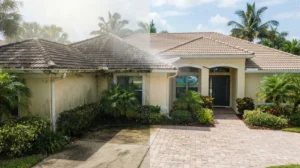
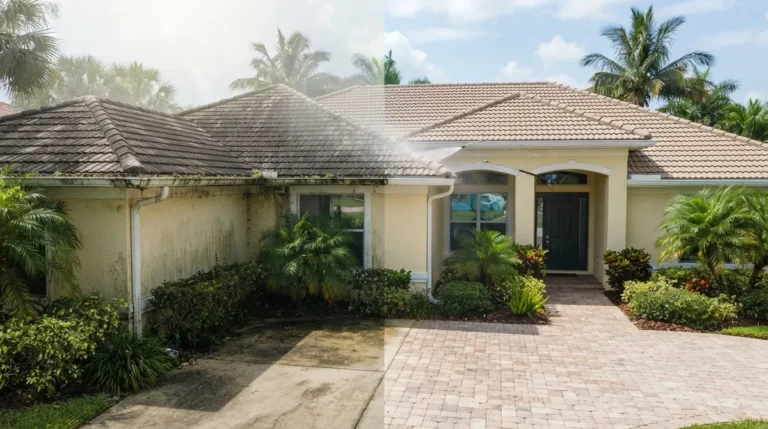
If you want to see real results from proper cleaning techniques, check out our gallery of before-and-after transformations from homes across the area.
Mistake 1: Using a Pressure Washer Directly on the Screen
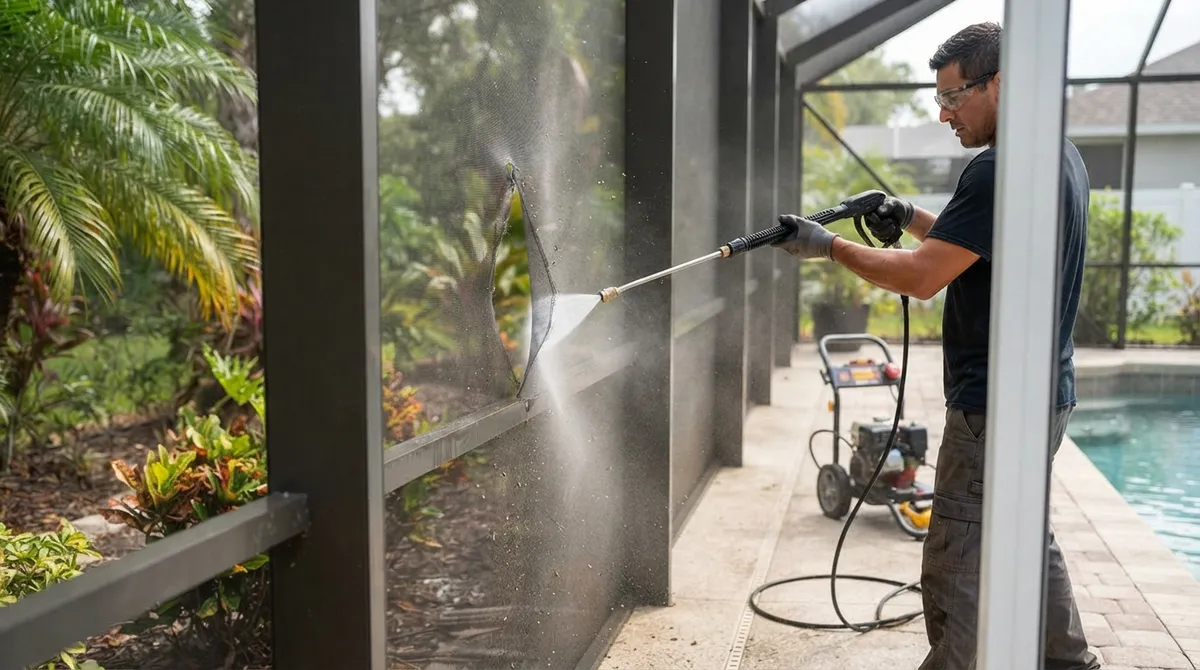
This is probably the biggest mistake homeowners make. Pool cage screens are delicate. Blasting them with a high-pressure washer can tear holes, bend frames, or completely destroy the mesh.
Many people assume more pressure means a cleaner result. That’s simply not true for screen enclosures. The material is thin and meant to let air and light through, not withstand heavy water pressure.
What to Do Instead
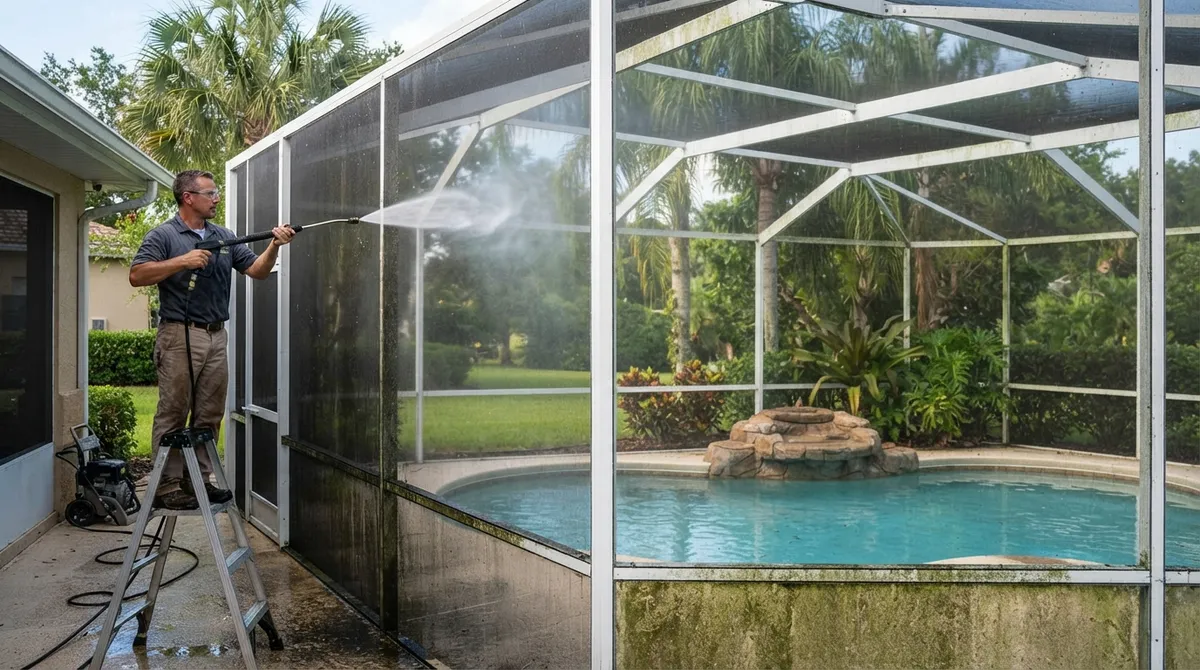
Soft washing is the safer choice for pool cages. This method uses low pressure combined with gentle, effective cleaning solutions. It lifts dirt and organic growth without damaging the screen or frame.
Our team explains this difference in detail in our article on soft wash vs pressure wash. Understanding which method fits your enclosure can save you from costly repairs down the road.
Mistake 2: Skipping Regular Maintenance Cleanings
Many homeowners wait until their pool cage looks really bad before calling for help. Unfortunately, this means algae and mold have had plenty of time to set in and cause damage.
Waiting too long between cleanings can lead to:
- Permanent discoloration on screens and frames
- Weakened screen material that tears easily
- Increased buildup that takes longer and costs more to remove
- Higher risk of pest problems from debris buildup
- Reduced pool area enjoyment due to poor visibility
Setting up a regular cleaning schedule keeps your pool cage looking fresh year-round. Most Hillsborough County homes benefit from cleaning every six to twelve months, though this can vary based on tree cover and sun exposure.
Mistake 3: Using the Wrong Cleaning Products
Grabbing whatever cleaner is under the sink might seem like a quick fix, but it can actually harm your pool cage. Harsh chemicals can discolor aluminum frames or weaken screen fibers over time.
Some homeowners also worry about the environmental impact of cleaning products running off into their yard or nearby water sources. This is a valid concern, especially for eco-conscious families in Hillsborough County.
Safe, Effective Alternatives
Professional cleaners use specially formulated, eco-friendly solutions designed for screen enclosures. These products break down mold and algae without harming plants, pets, or the surrounding landscape.
This approach protects your pool area while being kind to the environment. It’s one of the many reasons homeowners choose expert help over DIY methods, as we explain in our post on DIY vs. professional exterior cleaning.
Mistake 4: Ignoring the Frame and Track Areas
Many DIY cleaning attempts focus only on the visible screen panels. But dirt, mold, and debris often build up in the tracks, corners, and frame joints too.
These hidden areas can trap moisture and become breeding grounds for mold if left untouched. Over time, this buildup can even affect how smoothly your pool cage doors slide open and closed.
Here’s what a thorough pool cage cleaning should always include:
- Full screen panel cleaning, top to bottom
- Frame and support beam cleaning
- Track and door channel cleaning
- Corner and seam detail work
- Rinse and inspection for missed spots
Professionals know to check every inch, not just the parts you can easily see. This attention to detail makes a big difference in the final result and how long it lasts.
Mistake 5: Hiring Inexperienced or Unlicensed Cleaners
Not all cleaning services are created equal. Some companies may offer cheap rates but lack the experience needed to handle pool cage screens safely.
Hiring the wrong crew can lead to torn screens, damaged frames, or an incomplete job that leaves algae behind. It can also mean no accountability if something goes wrong during the cleaning process.
How to Choose the Right Team
Look for a company with a proven track record and positive local reviews. You can read customer reviews on Yelp or check out feedback on Facebook to see what past customers experienced.
Our guide on how to find reliable pressure washing services walks through the key things to look for, including licensing, insurance, and customer testimonials.
What Professional Pool Cage Cleaning Looks Like
Wondering what to expect when you hire a professional team? Here’s a simple breakdown of the process most homeowners can expect.
| Step | What Happens | Why It Matters |
|---|---|---|
| 1. Inspection | Technician checks screens, frames, and tracks | Identifies problem areas before starting |
| 2. Pre-Treatment | Eco-friendly solution applied to loosen buildup | Softens algae and mold for easier removal |
| 3. Soft Washing | Low-pressure rinse removes dirt and grime | Protects delicate screen material |
| 4. Detail Cleaning | Frames, tracks, and corners are cleaned | Ensures a thorough, complete job |
| 5. Final Rinse | Clean water rinse removes all residue | Leaves surfaces streak-free and bright |
This process is quick, safe, and effective. It’s designed to protect your investment while giving you the clear, bright pool area you deserve. For more on related services, take a look at our full list of services.
Benefits of Choosing Local Pool Cage Cleaning Experts
Working with a local company that knows Hillsborough County’s climate makes a real difference. We understand the specific challenges Brandon homeowners face, from heavy pollen season to summer storms that leave behind mineral deposits and debris.
Choosing a local, trusted provider offers several advantages:
- Familiarity with local weather patterns and common buildup issues
- Faster scheduling since the team is already in your area
- Better understanding of HOA requirements in Hillsborough County neighborhoods
- Established reputation with reviews from your neighbors
- Personalized service that fits your specific pool cage setup
Many homeowners also pair pool cage cleaning with other services like house washing or driveway and concrete cleaning to give their whole property a fresh look at once. Bundling services often saves time and keeps your entire home looking its best.
How Often Should You Clean Your Pool Cage
This is one of the most common questions we hear from Brandon homeowners. The answer depends on a few factors specific to your property.
Consider these factors when deciding on a cleaning schedule:
- How much tree coverage surrounds your pool area
- Whether your home faces heavy rain or wind exposure
- How close you live to bodies of water, which can increase mold growth
- Your personal preference for maintaining a spotless look
- Any HOA guidelines requiring regular upkeep
For most homes in Hillsborough County, cleaning every six to twelve months keeps things looking great. Homes with more shade or nearby water sources may need more frequent attention.
Protecting Your Investment for the Long Run
Your pool cage is more than just a screen. It’s an investment that protects your pool, keeps bugs away, and creates a comfortable outdoor living space for your family.
Regular cleaning extends the life of your enclosure and helps you avoid costly repairs. It also keeps your home looking sharp, which matters whether you’re planning to sell or simply want to enjoy your outdoor space to the fullest.
If you’re curious about how professional cleaning compares to tackling it yourself, our article on what makes professional pressure washing worth it breaks down the real value you get from hiring experts.
Ready for a Sparkling Clean Pool Cage
Your pool area should be a place to relax, not a source of stress. Avoiding these five common mistakes can save you time, money, and unnecessary headaches. And when in doubt, calling in the pros is always the safer bet.
At Buckhorn Power Wash, we’ve helped countless homeowners across Hillsborough County restore their pool enclosures to like-new condition. We use safe, effective soft washing techniques that protect your screens while delivering real results. You can visit us on Google to see what our Buckhorn Power Wash customers say about their experience working with our team.
Ready to give your pool cage the fresh start it deserves? Request your free quote today and see your price in minutes, or feel free to give us a call to talk through your specific needs. We’re proud to serve Brandon and all of Hillsborough County with prompt scheduling and results you can count on.
FAQs
Q: How often should I get my pool cage cleaned in Brandon FL?
A: Most homes in Brandon do great with a cleaning every six to twelve months. If you have lots of trees nearby or live close to water, you might want to clean a bit more often to keep algae and mold away.
Q: Can pressure washing damage my pool cage screen?
A: Yes, unfortunately regular pressure washing can tear the screen or bend the frame. That’s why we always recommend soft washing instead, which is gentle but still gets the job done beautifully.
Q: Is it safe to clean a pool cage myself?
A: You can try, but it’s easy to make mistakes that damage your screens or miss hidden mold spots. Hiring a pro takes the guesswork out and protects your investment for years to come.
Q: What’s the difference between soft washing and pressure washing for pool cages?
A: Soft washing uses low pressure and gentle cleaning solutions, perfect for delicate screens. Pressure washing uses much higher force, which works great on concrete but can seriously harm pool cage material.
Q: Will cleaning my pool cage help with HOA compliance?
A: Absolutely! Many Hillsborough County HOAs have strict rules about exterior appearance, and a clean pool cage helps you stay in good standing while keeping your home looking its best.