Key Takeaways
-
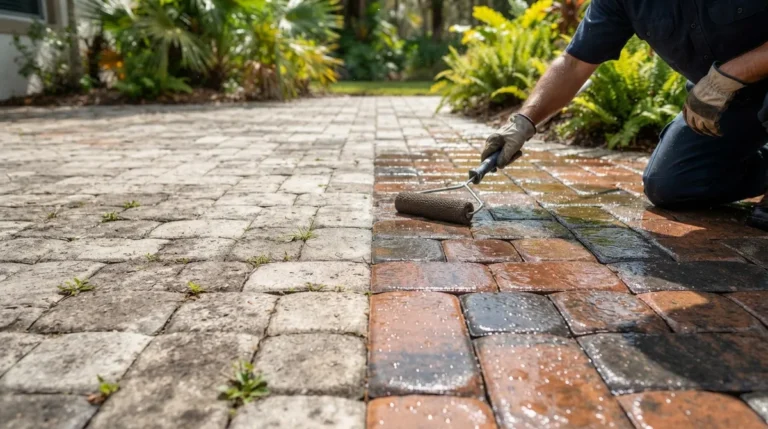
Use 3,000-3,500 PSI for standard residential driveways as the optimal balance, while decorative concrete needs only 1,500-2,500 PSI to prevent color fading and surface damage.
-
Always start with low PSI and test on a hidden section first; watch for warning signs like etching lines, splashing water, or roughened surfaces that indicate pressure is too high.
-
Nozzle angle matters as much as PSI—use 25-degree nozzles for most jobs and avoid 0-degree nozzles on concrete, as they create laser-focused streams that carve into surfaces.
-
PSI alone doesn't tell the whole story; GPM (gallons per minute) is equally important for effective rinsing, so balance both factors for optimal cleaning results.
-
Professional pressure washing reduces permanent damage risk, ensures consistent results, and often proves more cost-effective than DIY rental units that lack proper pressure calibration.
-
Eco-friendly cleaning with moderate pressure and biodegradable detergents provides better results than high-pressure blasting while reducing water waste and protecting landscaping.
Ever stood in your driveway wondering why that pressure washer you rented barely made a dent in those oil stains? Or maybe you’ve heard horror stories about someone etching lines into their concrete patio because they cranked the PSI too high. Choosing the right power washer PSI for concrete feels like a guessing game, but it doesn’t have to be. Homeowners across Hillsborough County ask us this question all the time, and we get it. Concrete looks tough, but it has its limits.
In this guide, we’ll break down exactly how much pressure your driveway, patio, or walkway can handle. We’ll compare low PSI versus high PSI, talk about what happens when you get it wrong, and explain why so many folks in Valrico, Riverview, and Brandon just call in the pros instead. Whether you’re a hands-on DIYer or a busy professional who’d rather spend Saturday relaxing, this article has you covered.
What Does PSI Actually Mean for Concrete Cleaning?
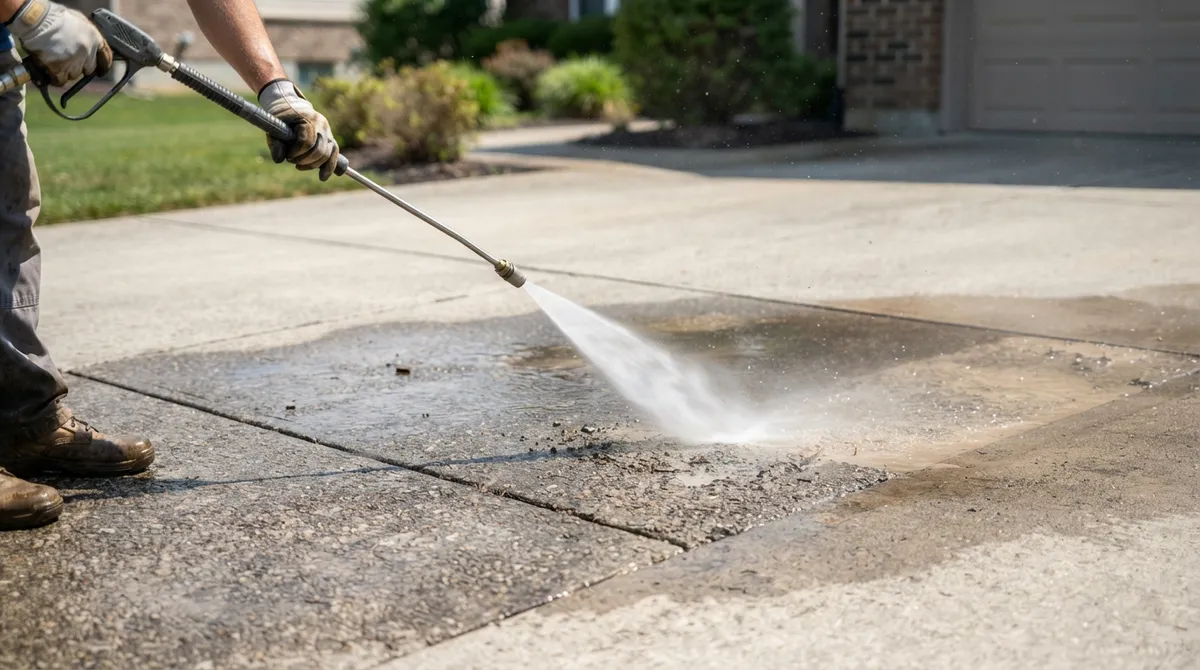
PSI stands for “pounds per square inch.” It measures how much force the water hits your surface with. Think of it like the difference between a gentle rain shower and a fire hose. The higher the PSI, the harder that water blasts whatever it touches.
For concrete, PSI matters a lot. Too little, and you’re just pushing dirt around. Too much, and you risk gouging the surface or blasting away the top layer entirely. Getting this balance right is the whole secret to a clean concrete surface without any damage.
Low PSI vs. High PSI: The Core Comparison
Let’s get straight to the comparison everyone wants answered. Should you go low or high when cleaning concrete? Here’s how they stack up against each other.
- Low PSI (1,300–2,000): Safer for older or decorative concrete, but slower and less effective on tough stains.
- Mid-range PSI (2,500–3,000): The sweet spot for most residential driveways and patios.
- High PSI (3,500–4,000+): Great for stubborn oil stains and heavy grime, but risky in untrained hands.
- Extremely high PSI (4,000+): Rarely needed for residential concrete and often causes etching or pitting.
Most homeowners find that anything above 4,000 PSI is overkill for a standard driveway. It’s like using a sledgehammer to crack an egg. You might get the job done, but you’ll probably make a mess along the way.
The Ideal PSI Range for Different Concrete Surfaces
Not all concrete is created equal. A stamped decorative patio needs a much gentler touch than a plain garage driveway. Here’s a quick breakdown to help you understand what your specific surface can handle.
| Concrete Surface Type | Recommended PSI Range | Notes |
|---|---|---|
| Standard Driveway | 3,000–3,500 PSI | Handles tire marks and oil stains well |
| Stamped or Decorative Concrete | 1,500–2,500 PSI | Lower pressure prevents color fading |
| Sidewalks and Walkways | 2,500–3,000 PSI | Balances cleaning power with safety |
| Pool Decks | 1,500–2,500 PSI | Softer approach protects textured surfaces |
| Garage Floors (Sealed) | 2,000–3,000 PSI | Too much pressure can strip sealant |
If you’re unsure which category your surface falls into, it’s always smart to start low and work your way up. Our team at Buckhorn Power Wash tests every surface before diving in, which is one reason our Driveway & Concrete Cleaning service gets such great results without damage.
Signs You’re Using the Wrong PSI
Sometimes the pressure washer tells you it’s wrong before you even realize it. Watch for these warning signs while you work.
- Water splashes back at you instead of hitting the surface cleanly.
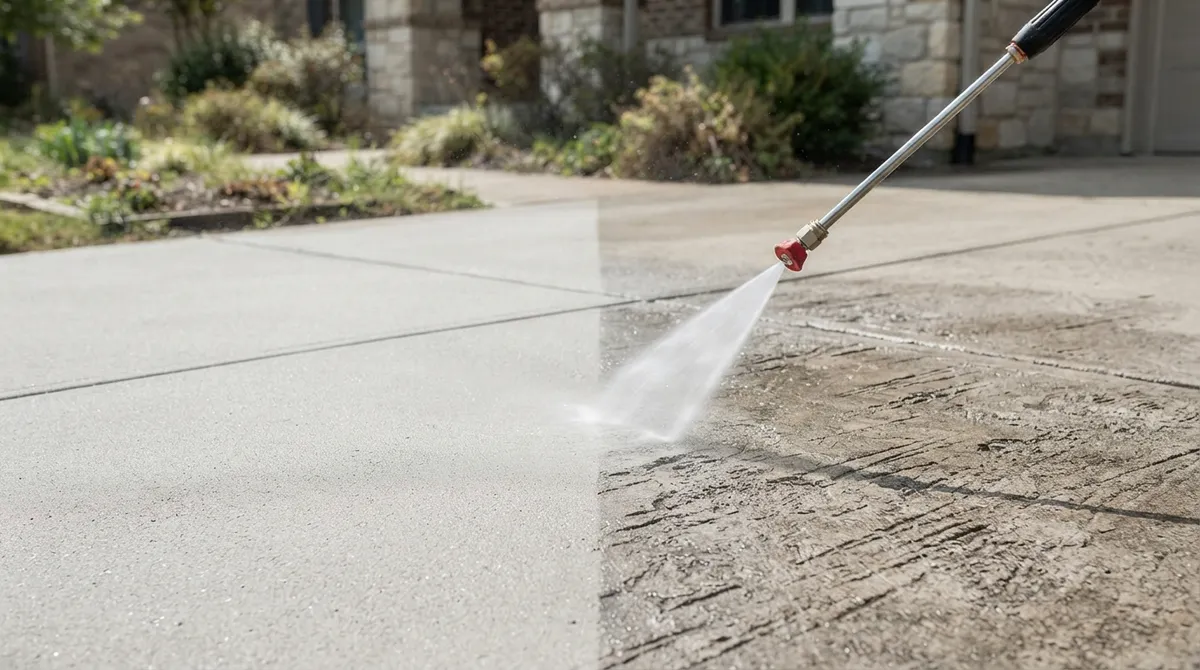
- You notice light etching or streaking lines appearing on the concrete.
- Stains aren’t lifting even after multiple passes.
- The surface starts looking rougher or more porous than before.
- Grout lines or expansion joints begin to erode.
If you spot any of these signs, stop immediately. Adjust your nozzle, step back further from the surface, or dial down the pressure. Concrete damage is often permanent, and no one wants a driveway that looks worse after cleaning than before.
Why DIY Pressure Washing Can Go Wrong
Rental pressure washers usually come with fixed settings and generic nozzles. That one-size-fits-all approach doesn’t account for your specific concrete age, sealant, or wear level. It’s a bit like using the same recipe for every cake without checking the oven temperature first.
We’ve seen plenty of well-meaning homeowners in Lithia and Apollo Beach try the DIY route, only to end up with uneven cleaning patterns or damaged surfaces. If you want to learn more about what goes wrong, check out our article on mistakes to avoid when using a power washer to clean concrete.
Nozzle Selection Matters Just as Much as PSI
PSI alone doesn’t tell the whole story. The nozzle angle changes how concentrated that water pressure becomes. A 0-degree nozzle creates a laser-focused stream that can carve into concrete fast. A 25-degree or 40-degree nozzle spreads the pressure out, making it safer for broad cleaning.
- 0-degree nozzle: Extremely focused, best avoided for concrete cleaning.
- 15-degree nozzle: Good for tough stains but requires steady hands.
- 25-degree nozzle: The go-to choice for most driveway cleaning jobs.
- 40-degree nozzle: Gentler option, ideal for lighter dirt and decorative surfaces.
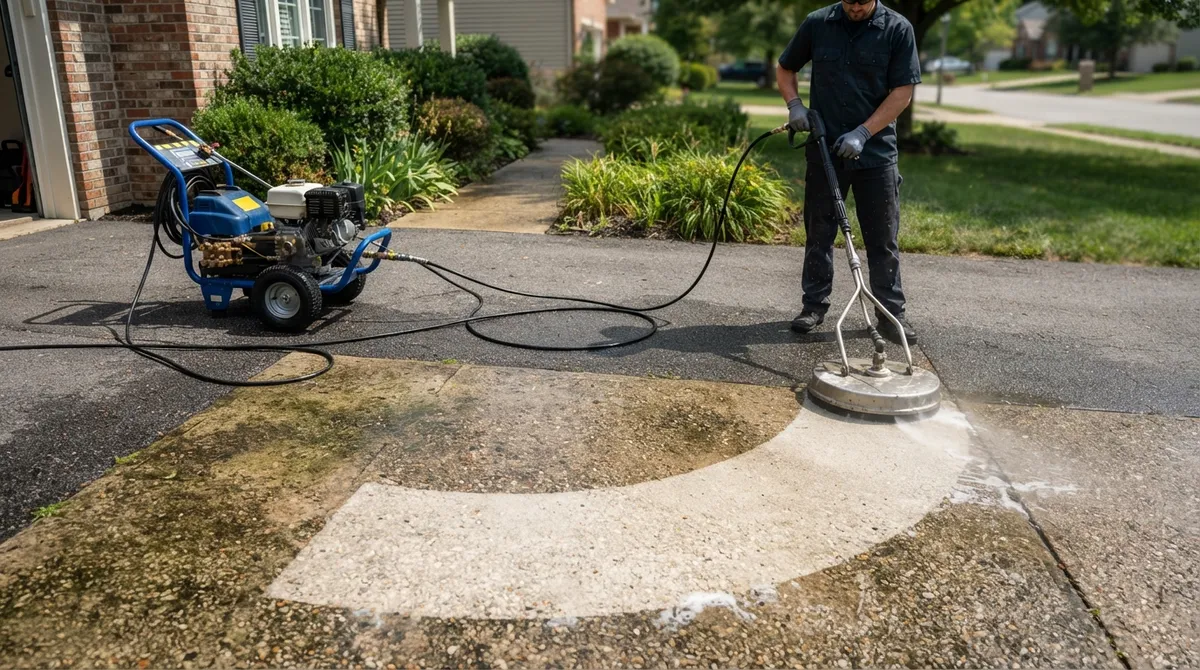
- Surface cleaner attachment: Spreads pressure evenly across large areas, reducing streaking.
Professional crews often use rotating surface cleaners because they distribute pressure more evenly than a handheld wand. This is one reason results from professionals tend to look so much cleaner and more uniform, as shown in our gallery of completed projects.
Gas vs. Electric Pressure Washers for Concrete
The type of machine you use also affects your PSI options. Here’s a simple comparison to help you understand the difference.
| Feature | Electric Pressure Washer | Gas Pressure Washer |
|---|---|---|
| Typical PSI Range | 1,300–2,300 PSI | 2,800–4,000+ PSI |
| Best For | Light residential cleaning | Heavy-duty concrete and driveways |
| Noise Level | Quieter | Louder |
| Portability | Lightweight, needs outlet | Heavier, fully mobile |
| Maintenance | Low | Higher, requires oil changes |
Gas-powered units usually deliver the higher PSI needed for heavily stained concrete. However, they also carry more risk of damage if handled incorrectly. This is part of why professional-grade equipment paired with trained technicians tends to outperform rental units every time.
Water Flow Rate: The Often Forgotten Factor
PSI gets all the attention, but GPM (gallons per minute) matters just as much. Higher GPM means more water volume, which helps rinse away loosened dirt faster. A machine with high PSI but low GPM might not clean as effectively as one with balanced numbers.
Think of PSI as the strength of the punch and GPM as how many punches you throw per second. You need both working together for the best results. This combination is exactly what allows our team to safely handle everything from house washing to concrete driveways without switching equipment constantly.
Step-by-Step: How Professionals Approach Concrete PSI
Here’s a simplified look at how a trained technician typically approaches a concrete cleaning job.
- Inspect the concrete for cracks, sealant, or decorative finishes.
- Choose a starting PSI on the lower end of the recommended range.
- Test a small, hidden section before cleaning the full surface.
- Apply an eco-friendly cleaning solution to break down grime first.
- Gradually increase pressure only if the surface can handle it.
- Use a surface cleaner attachment for even, streak-free results.
- Rinse thoroughly and inspect the finished surface for consistency.
This methodical approach is exactly why hiring professionals often makes more sense than guessing with a rental machine. If you’re curious about the broader benefits, our article on what makes professional pressure washing services worth it covers this in more detail.
Why Hillsborough County Homeowners Trust the Pros
Florida’s heat and humidity create the perfect breeding ground for algae, mold, and mildew on concrete surfaces. If you live in an HOA community, you already know how quickly a dirty driveway can trigger a complaint letter. Getting the PSI right isn’t just about looks. It’s about avoiding fines and protecting your property value.
Buckhorn Power Wash has helped homeowners throughout Tampa, Brandon, Valrico, Riverview, and Lithia keep their concrete looking fresh without the stress of DIY guesswork. We understand which PSI settings work best for Florida’s specific concrete mixes and weather conditions. You can request your free quote in just a few minutes using our simple online tool.
Eco-Friendly Cleaning Without Sacrificing Results
For homeowners who care about the environment, high PSI isn’t always the answer anyway. Using the right combination of moderate pressure and biodegradable cleaning solutions often gets better results with less water waste. This approach protects nearby landscaping, storm drains, and local waterways.
- Lower water usage compared to constant high-pressure blasting.
- Biodegradable detergents that break down grime without harsh chemicals.
- Reduced risk of runoff pollution into nearby storm drains.
- Gentler impact on surrounding plants and grass.
This is part of why so many eco-conscious homeowners choose professional soft washing and pressure washing combinations instead of relying purely on brute force. You can read more about this approach in our comparison article, soft wash vs. pressure wash: which is best for your Florida home.
DIY vs. Professional: Which One Really Wins?
Let’s be honest about the trade-offs here. DIY pressure washing can save money upfront, but it comes with real risks.
- DIY Pros: Lower upfront cost, flexible scheduling, sense of accomplishment.
- DIY Cons: Risk of concrete damage, inconsistent results, time-consuming, safety hazards.
- Professional Pros: Correct PSI every time, faster completion, consistent results, insured work.
- Professional Cons: Requires scheduling and payment for service.
For busy professionals and time-poor families, the choice often comes down to simple math. Is it worth risking a damaged driveway to save a few hours? Most homeowners we talk to say no. If you want a deeper breakdown, check out our full comparison in DIY vs. professional exterior cleaning: which wins?
Protecting Your Investment for the Long Term
Concrete isn’t cheap to replace. Using the wrong PSI even once can create permanent damage that shortens its lifespan. Affluent homeowners in high-value neighborhoods especially understand this. Protecting your driveway, patio, and walkways isn’t just about appearance. It’s about protecting a real financial investment in your property.
Regular professional cleaning also helps you catch small cracks or wear spots early, before they become bigger and more expensive problems. This proactive approach is part of what makes routine pressure washing services such a smart long-term decision.
Quick Reference: PSI Cheat Sheet for Concrete Cleaning
Here’s a simple list to keep handy if you ever decide to tackle a small concrete cleaning job yourself.
- Always start with the lowest PSI in the recommended range.
- Test on a small, hidden section first.
- Keep the nozzle at least 12 inches from the surface initially.
- Never use a 0-degree nozzle on concrete.
- Watch for etching or splashing as warning signs.
- Increase pressure gradually only if needed.
- Rinse thoroughly to remove all loosened debris.
If any of this feels overwhelming, that’s completely normal. Many homeowners feel more confident letting trained technicians handle it instead. You can always call us directly if you have questions about your specific driveway or patio.
What Our Customers Say
We take pride in the relationships we’ve built throughout Hillsborough County. Don’t just take our word for it. You can see what our Buckhorn Power Wash customers say on Facebook or read honest reviews on Yelp. According to the Environmental Protection Agency, proper concrete maintenance also plays a role in reducing stormwater runoff issues, which matters for our whole community.
You can also visit us on Google — Buckhorn Power Wash to see our location, hours, and even more customer feedback. We love being part of the Hillsborough County community, and we treat every driveway like it’s our own.
Wrapping It All Up
Finding the right power washer PSI for concrete doesn’t have to be stressful. Whether you’re dealing with a stamped patio in Valrico or a heavily stained driveway in Riverview, understanding your PSI options makes all the difference. Too low, and you waste time. Too high, and you risk permanent damage to a surface that’s expensive to replace.
If all this talk of PSI, nozzles, and GPM feels like more than you want to deal with on a Saturday, we completely understand. That’s exactly why Buckhorn Power Wash exists. We bring the right equipment, the right pressure settings, and years of local experience to every job across Hillsborough County. Ready to see your driveway looking brand new again? Request your free quote today and let us handle the guesswork for you.
FAQs
Q: What is the best PSI for cleaning a concrete driveway?
A: Most residential driveways clean up beautifully between 3,000 and 3,500 PSI. That said, older or decorative concrete may need a gentler touch closer to 2,000 PSI to avoid any surface damage.
Q: Can too much PSI damage my concrete?
A: Absolutely, and it happens more often than you’d think! High PSI combined with a narrow nozzle angle can etch lines into your concrete or strip away protective sealant, so it’s always better to start low and adjust up carefully.
Q: Do I need a different PSI for stamped or decorative concrete?
A: Yes, decorative concrete is more delicate and usually does best with 1,500 to 2,500 PSI. Going higher risks fading the color or damaging the textured pattern that makes it special.
Q: Is it safer to hire a professional instead of renting a pressure washer?
A: For most homeowners, yes! Professionals know exactly which PSI works for your specific concrete type, and they carry the right nozzles and equipment to avoid costly mistakes.
Q: How often should I have my concrete pressure washed?
A: Most Hillsborough County homes benefit from professional concrete cleaning once or twice a year, especially given Florida’s humidity and algae growth. Regular cleaning also helps you spot small cracks before they become bigger problems.