Key Takeaways
-
Use 3,000-3,500 PSI for standard concrete driveways with a 15-25 degree nozzle; exceeding 4,000 PSI risks permanent etching that cannot be reversed without resurfacing.
-
Electric pressure washers (1,300-1,700 PSI) are too weak for driveways with stubborn algae, oil stains, and years of buildup; gas-powered or professional equipment delivers better results.
-
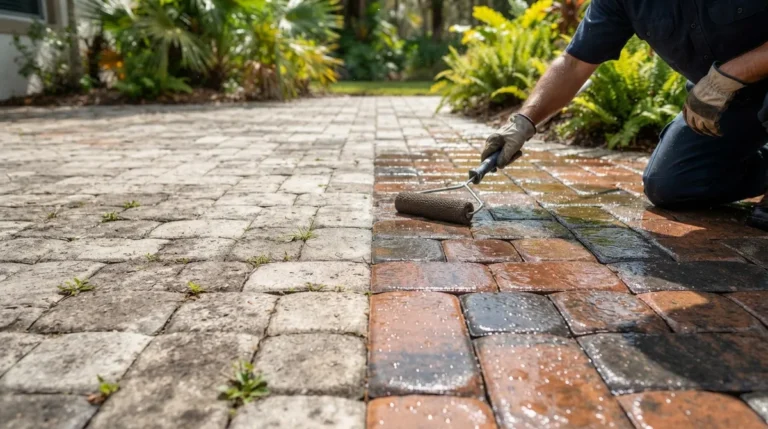
Adjust PSI based on surface type: stamped/colored concrete needs 1,500-2,500 PSI, pavers need 2,000-3,000 PSI, and older cracked concrete needs 1,500-2,500 PSI to avoid damage.
-
Florida's humidity and rainfall create persistent algae and mold growth, requiring more frequent driveway cleaning than drier climates and making professional calibration worthwhile for HOA compliance.
Grabbing a pressure washer and blasting your driveway sounds simple, right? Not quite. The wrong pressure washer PSI for driveway cleaning can crack concrete, carve grooves into pavers, or just waste your whole Saturday with barely-there results. Here in Hillsborough County, where humidity feeds algae and mildew year-round, getting your driveway PSI right matters even more.
Whether you’re a busy homeowner in Brandon, an HOA resident in Valrico watching the clock on a compliance deadline, or someone in Riverview who just wants a clean driveway without the guesswork, this guide breaks it all down. We’ll walk through the PSI mistakes that trip people up, what the right pressure actually looks like, and why so many folks in the area just request a free quote instead of risking it themselves. Let’s dig in.
Why PSI Matters So Much for Driveway Cleaning
PSI stands for pounds per square inch. It measures how much force the water hits your driveway with. Too little, and you’re just moving dirt around. Too much, and you’re etching lines into concrete or blasting chunks out of old pavers.
Concrete driveways are tough, but they’re not invincible. Cracks, expansion joints, and old sealant can all react badly to excessive pressure. Meanwhile, stains from oil, rust, algae, and tire marks need a certain amount of force to lift away. Finding that sweet spot is the whole game.
What Happens When PSI Is Wrong
- Etching or striping marks that never fully buff out
- Chipped or pitted concrete near cracks and edges
- Loosened paver joints and washed-out polymeric sand
- Stains that barely fade because pressure was too low
- Wasted hours redoing sections that looked “clean” but weren’t
These mistakes are exactly why so many homeowners eventually turn to professionals. If you’ve ever wondered what makes professional pressure washing services worth it, this is a big part of the answer.
Mistake 1: Using Too Much PSI on Standard Concrete
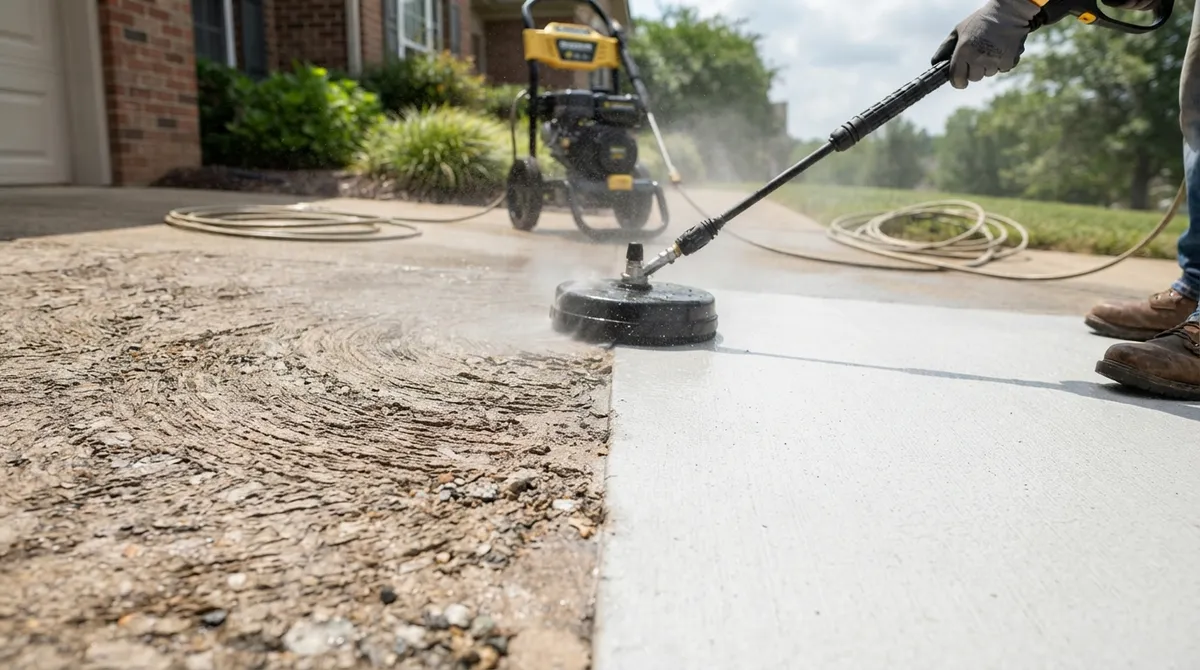
This is the big one. Homeowners often assume more power equals a cleaner driveway. It doesn’t work that way. Standard residential concrete usually only needs somewhere between 3,000 and 3,500 PSI, and even that should be paired with the right nozzle and distance.
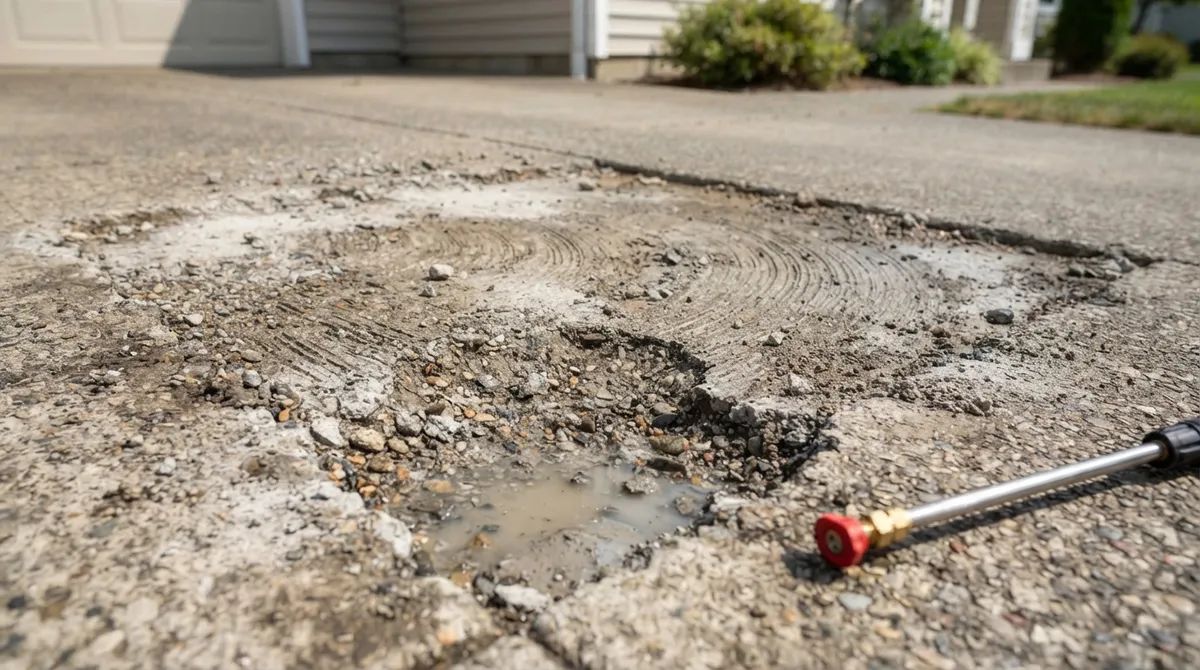
Cranking a machine up past 4,000 PSI on a home driveway is asking for trouble. You risk permanent etching, especially if you hold the wand in one spot too long. Once concrete is etched, there’s no undoing it without resurfacing or sealing over the damage.
Signs You Went Too High
- Visible stripe patterns where the nozzle passed
- Rough, sandy texture instead of smooth concrete
- Small chips near cracks or seams
- Faded color in a wand-shaped pattern
If any of this sounds familiar, it might be time to let a pro handle it going forward. Our team at Buckhorn Power Wash calibrates pressure specifically for your surface type every single time, so you never have to guess.
Mistake 2: Using Too Little PSI and Wasting Your Time
On the flip side, some homeowners play it too safe. They’ve heard horror stories about damage, so they dial the pressure way down. The problem? Stubborn algae, mildew, and oil stains just laugh at low pressure.
This is especially common with electric pressure washers, which usually top out around 1,300 to 1,700 PSI. That’s fine for patio furniture or cars, but it’s not enough for a driveway covered in years of Florida grime. You’ll spend hours scrubbing and still end up disappointed.
Common Signs Your PSI Is Too Low
- Green or black algae streaks that barely lighten
- Oil stains that stay dark after multiple passes
- Dirt that smears instead of lifting away
- Uneven cleaning with patchy results across the surface
If this is you, it might be time to stop fighting your equipment and instead call our team for a driveway that actually gets clean the first time.
Mistake 3: Ignoring Nozzle Angle and Surface Type
PSI isn’t the only factor. Nozzle choice and technique matter just as much. A 0-degree red nozzle concentrates all that pressure into a tiny point, which can gouge concrete even at moderate PSI. Most professionals use a 15 or 25-degree nozzle for driveways, spreading the force over a wider area.
Surface type changes the equation too. Pavers need gentler handling than poured concrete because the joints between them are more vulnerable. Stamped or decorative concrete with color sealant also requires extra caution, since aggressive pressure can strip the finish right off.
Recommended PSI Ranges by Surface
| Driveway Surface | Recommended PSI Range | Nozzle Type |
|---|---|---|
| Standard poured concrete | 3,000–3,500 PSI | 15–25 degree |
| Stamped or colored concrete | 1,500–2,500 PSI | 25–40 degree, low pressure |
| Brick or concrete pavers | 2,000–3,000 PSI | 25 degree, wide fan |
| Older or cracked concrete | 1,500–2,500 PSI | 25–40 degree, wide fan |
These numbers are general guidelines, not hard rules. Every driveway has its own quirks based on age, sealant, and past repairs. That’s why a quick professional driveway cleaning often saves money in the long run by avoiding costly mistakes.
DIY vs Professional: Which Makes More Sense?
Renting or buying a pressure washer feels like a money-saver at first. But add up the time, the risk of damage, and the cost of gas or electric models with the right PSI rating, and it often evens out. Many time-poor professionals in Hillsborough County would rather spend Saturday with family than wrestling a rented machine.
Quick Comparison: DIY vs Hiring a Pro
| Factor | DIY Pressure Washing | Professional Service |
|---|---|---|
| Equipment cost | Rental or purchase fees | Included in service |
| Risk of damage | Higher without experience | Low, PSI calibrated per surface |
| Time investment | Half a day or more | None required from you |
| Consistency of results | Varies by skill level | Reliable, professional finish |
If you want a deeper breakdown, check out our comparison on DIY vs. professional exterior cleaning to see which option really wins for your situation.
Why Hillsborough County Driveways Need Extra Care
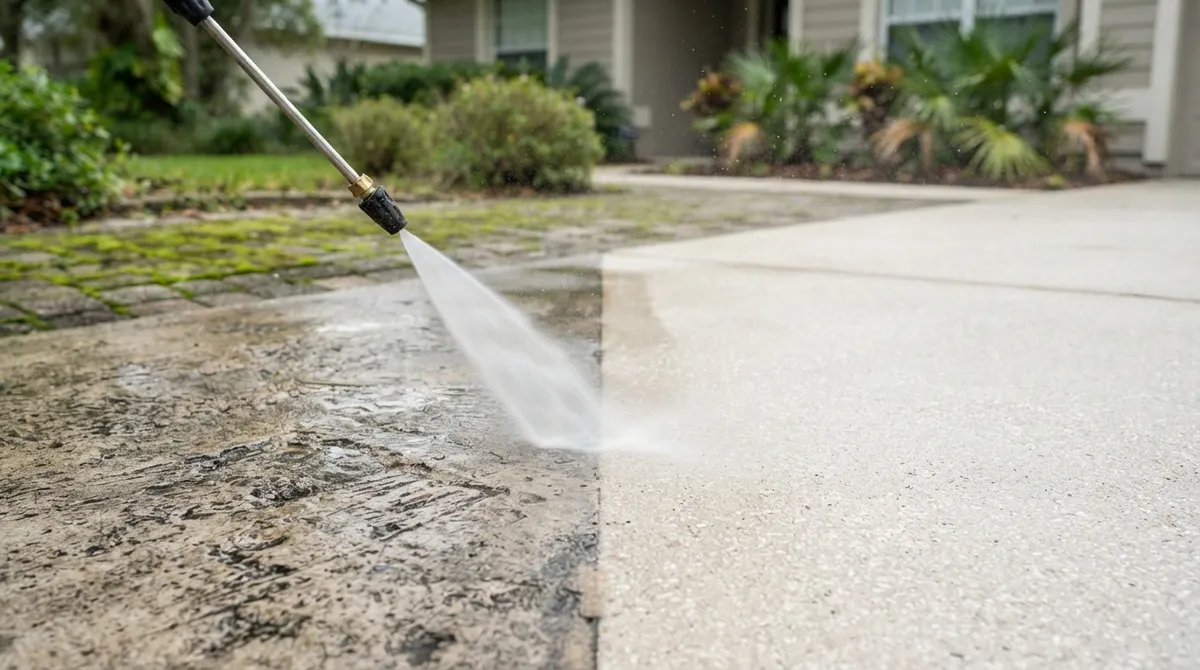
Florida’s climate is rough on concrete and pavers. Heavy rain, humidity, and shade from oak trees create the perfect breeding ground for algae and mold. That means driveways here often need attention more often than in drier climates.
HOA-compliant residents in particular can’t afford to guess. A poorly cleaned or damaged driveway can lead to fines or complaints from the community board. Professional driveway and concrete cleaning ensures consistent, HOA-friendly results without the stress.
Common Hillsborough County Driveway Issues
- Algae and mold growth from high humidity
- Rust stains from sprinklers and irrigation systems
- Tire marks and oil stains from daily driving
- Efflorescence, or white mineral buildup, on newer concrete
- Moss creeping in from shaded, tree-covered areas
Eco-Friendly PSI Considerations
For eco-conscious homeowners, the right PSI setting also affects water usage. Higher PSI generally means less water needed to achieve the same clean, since the force does more of the work. Pairing correct pressure with biodegradable cleaning solutions gets the job done without excess runoff or harsh chemicals.
Our approach favors efficient, low-waste methods whenever possible, blending pressure washing for concrete with gentler soft washing techniques for surrounding surfaces like siding or fencing. This keeps your whole property looking sharp without unnecessary water waste.
How Buckhorn Power Wash Gets PSI Right Every Time
We’ve spent years dialing in the exact pressure washer PSI for driveway surfaces across Hillsborough County. From Tampa to Lithia, our team adjusts settings based on concrete age, paver type, and stain severity before ever pulling the trigger.
Our Simple Process
- Inspect the driveway surface and note any cracks or sealant
- Choose the correct PSI range and nozzle for the material
- Apply eco-friendly cleaning solution if needed for stubborn stains
- Pressure wash in even, overlapping passes at a safe distance
- Final rinse and inspection to confirm a streak-free finish
You can browse real results in our project gallery or learn more about our company and how we’ve built trust across the county. Many of our happy customers also share their experiences on Facebook and leave reviews on Yelp, which is a great way to see what to expect before booking.
You can also visit us on Google — Buckhorn Power Wash to see photos, reviews, and directions straight from our service area in Hillsborough County.
Quick Checklist Before You Rent a Pressure Washer
- Confirm your driveway material (poured concrete, pavers, or stamped concrete)
- Check for existing cracks, chips, or old sealant that could worsen with high PSI
- Choose a wide-fan nozzle, never a pinpoint 0-degree tip
- Test a small, hidden section first before covering the whole driveway
- Keep the wand moving constantly, never pause in one spot
If any of this feels overwhelming, that’s totally normal. Most homeowners aren’t equipment experts, and that’s okay. It’s exactly why professional help exists.
Final Thoughts on Getting PSI Right
Your driveway is often the first thing guests and neighbors notice about your home. Getting the pressure washer PSI for driveway cleaning right protects that investment and keeps your curb appeal looking sharp all year long. Too much pressure damages surfaces permanently. Too little wastes your weekend with disappointing results.
The good news? You don’t have to figure this out alone. Our team handles the guesswork every day across Brandon, Valrico, Riverview, Lithia, and beyond. If you’re ready for a spotless driveway without the risk of DIY mistakes, go ahead and request your free quote today and see your price in minutes, no home visit required.
FAQs
Q: What is the best PSI for pressure washing a driveway?
A: For most standard concrete driveways, 3,000 to 3,500 PSI works great. If you have pavers, stamped concrete, or an older driveway with cracks, you’ll want to stay lower, around 1,500 to 2,500 PSI, to avoid damage.
Q: Can too much PSI damage a concrete driveway?
A: Absolutely, and it happens more than you’d think. High PSI held too close or too long can etch permanent stripes into concrete, which is why nozzle choice and technique matter just as much as the number itself.
Q: Is an electric pressure washer strong enough for driveways?
A: Most electric models max out around 1,300 to 1,700 PSI, which usually isn’t enough for tough algae, oil stains, or years of buildup. Gas-powered units, or professional equipment, typically get better results faster.
Q: Why does Florida weather affect driveway cleaning needs?
A: Hillsborough County’s humidity and rain create ideal conditions for algae, mold, and mildew to thrive. That means driveways here often need cleaning more frequently than in drier parts of the country.
Q: Should I hire a professional instead of renting a pressure washer?
A: If you want consistent, damage-free results without spending your weekend on it, hiring a pro makes a lot of sense. Our team already knows the right PSI for your exact driveway type, so there’s no guesswork involved.