Key Takeaways
-
Professional paver sanding and sealing protects your investment by preventing joint sand erosion, stopping weed growth, and extending paver lifespan in Florida's harsh climate of heavy rain, UV exposure, and humidity.
-
Florida homes need resealing every 1-3 years due to frequent rain washing out sand, algae growth, and UV fading; homes in HOA communities especially benefit from staying proactive to avoid violation notices.
-
Hiring a professional ensures longer-lasting results (1-3 years) compared to DIY approaches, avoids costly mistakes like streaking or over-sanding, and includes commercial-grade sealants rated for Florida climates.
-
Watch for warning signs like weeds between joints, washed-away sand, faded color, or standing water; request a free quote and professional evaluation if you notice two or more of these issues.
Your paver driveway or patio used to be the star of your yard. Now the sand between the joints is washing away, weeds are popping through, and the color looks faded and dull. If you have typed “paver sanding and sealing near me” into your phone lately, you are not alone. Homeowners across Hillsborough County search for this exact service every week, especially after a rainy Florida summer takes its toll on outdoor surfaces.
The good news is that paver sanding and sealing is one of the easiest ways to bring your outdoor space back to life. It protects your investment, keeps weeds and ants out of the joints, and makes your pavers look freshly installed again. In this guide, we will walk you through what the process involves, how to choose the right pro, and why pairing it with professional driveway and concrete cleaning gives you the best results. Let’s get your pavers looking their best again.
What Is Paver Sanding and Sealing?
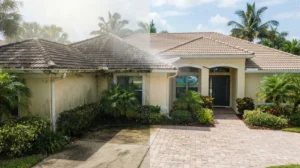
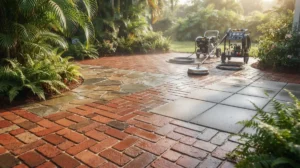
Paver sanding and sealing is a two-part process that restores and protects interlocking paver surfaces. It is common on driveways, walkways, pool decks, and patios throughout Hillsborough County neighborhoods.
Here is a simple breakdown of what happens during the process:
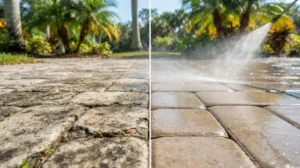
- The pavers are deep cleaned to remove dirt, algae, and old sand
- Any weeds or moss growing between joints are cleared out
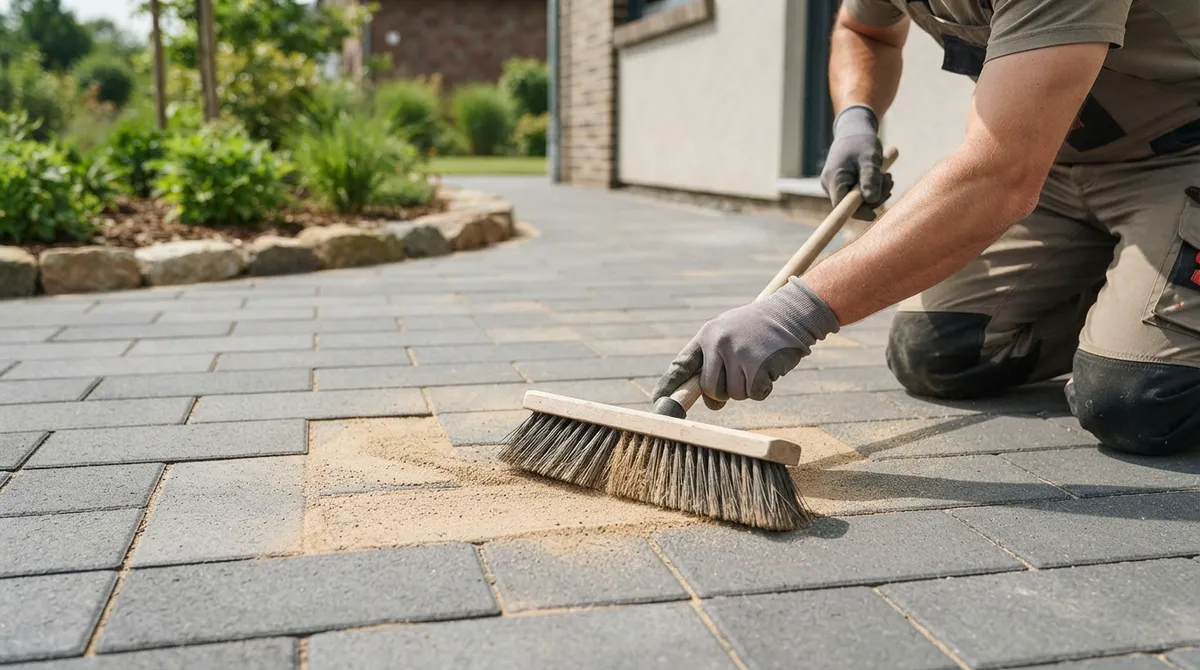
- Fresh polymeric sand is swept into the joints to lock pavers in place
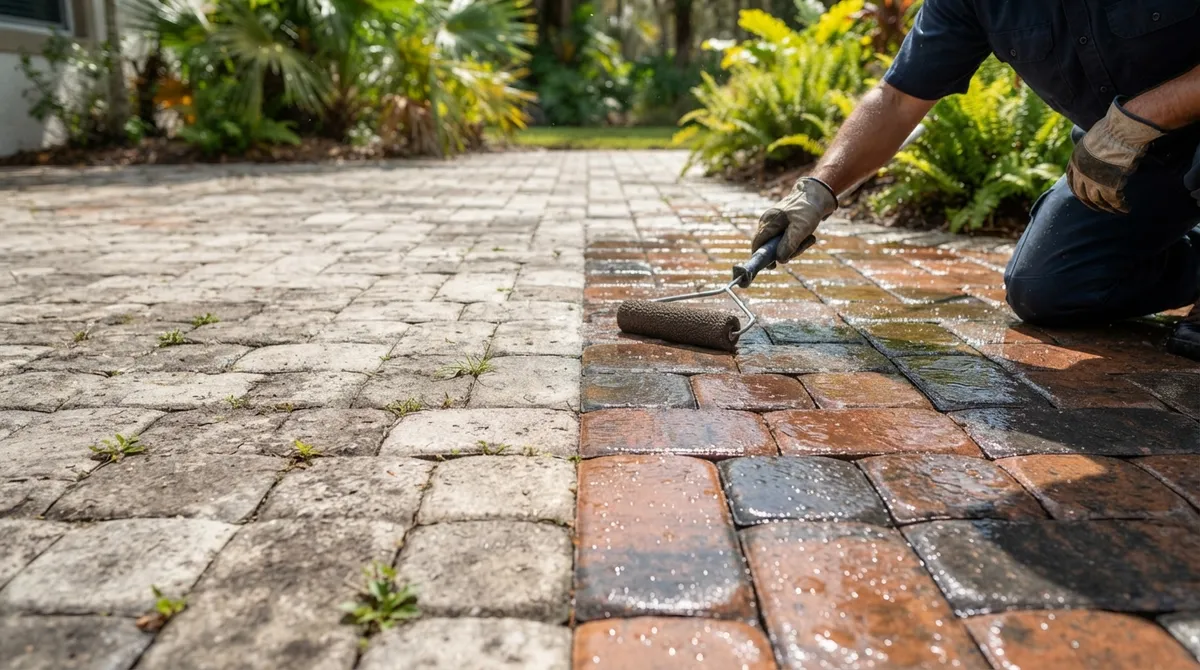
- A protective sealant is applied to guard against stains, UV rays, and moisture
- The surface is left to cure, creating a long-lasting protective layer
This process does more than just improve looks. It actually extends the life of your pavers by keeping them stable and preventing shifting.
Why Florida Homes Need This Service More Than Most
Hillsborough County weather is tough on outdoor surfaces. Heavy rain, intense sun, and high humidity create the perfect storm for paver damage. Here is why local homes need extra attention:
- Frequent rain washes out joint sand faster than in drier climates
- High humidity encourages algae and mold growth between pavers
- Intense UV exposure fades paver color over time
- Sandy soil conditions can cause pavers to shift or settle unevenly
- Storm season increases the risk of erosion around paver edges
Because of these conditions, most professionals recommend resealing every one to three years, depending on foot traffic and sun exposure. Homes in HOA-governed communities especially benefit from staying ahead of this maintenance, since faded or shifting pavers can trigger violation notices.
Signs You Need Paver Sanding and Sealing Near Me
Not sure if it is time to search for this service? Watch for these warning signs:
- Weeds or grass growing between paver joints
- Sand has washed away, leaving gaps or wobbly pavers
- Faded, chalky, or blotchy paver color
- Ants or other insects nesting in the joints
- Standing water or pooling after rain
- Visible algae, moss, or dark staining on the surface
If you notice two or more of these signs, it is a good time to request a free quote and get your pavers evaluated by a professional.
Step-by-Step: How Professionals Handle Paver Sanding and Sealing
Here is what a typical professional service looks like from start to finish:
- Inspection: The technician checks for cracked, sunken, or loose pavers before starting
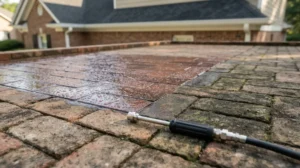
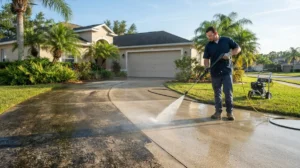
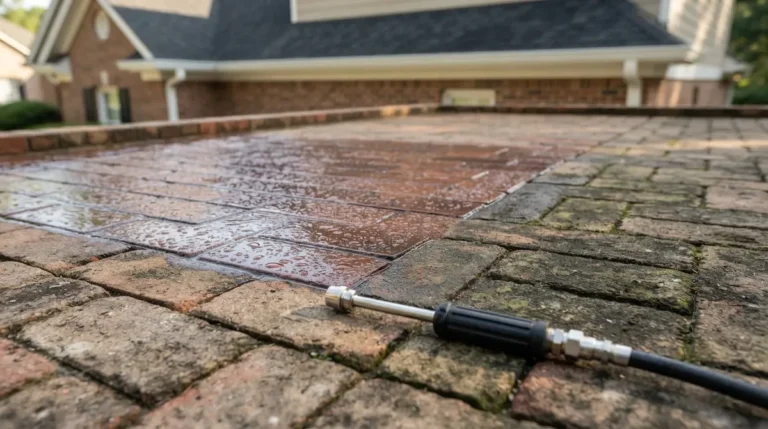
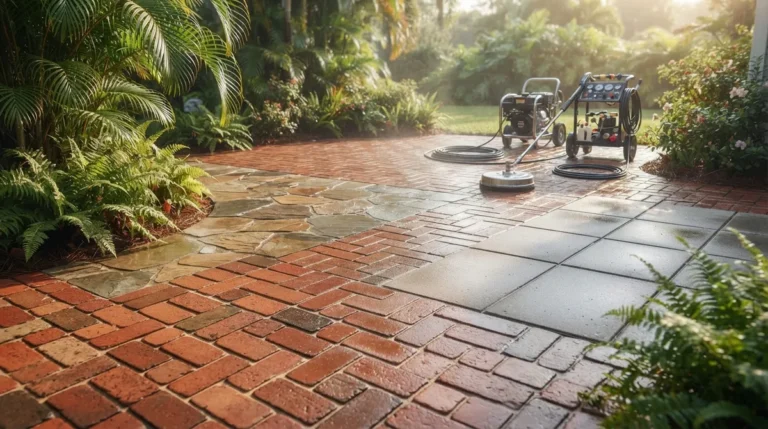
- Pressure washing: A deep clean removes dirt, algae, and old sand from every joint
- Weed treatment: Any vegetation between pavers is removed and treated to prevent regrowth
- Drying time: The surface is allowed to fully dry before sanding begins
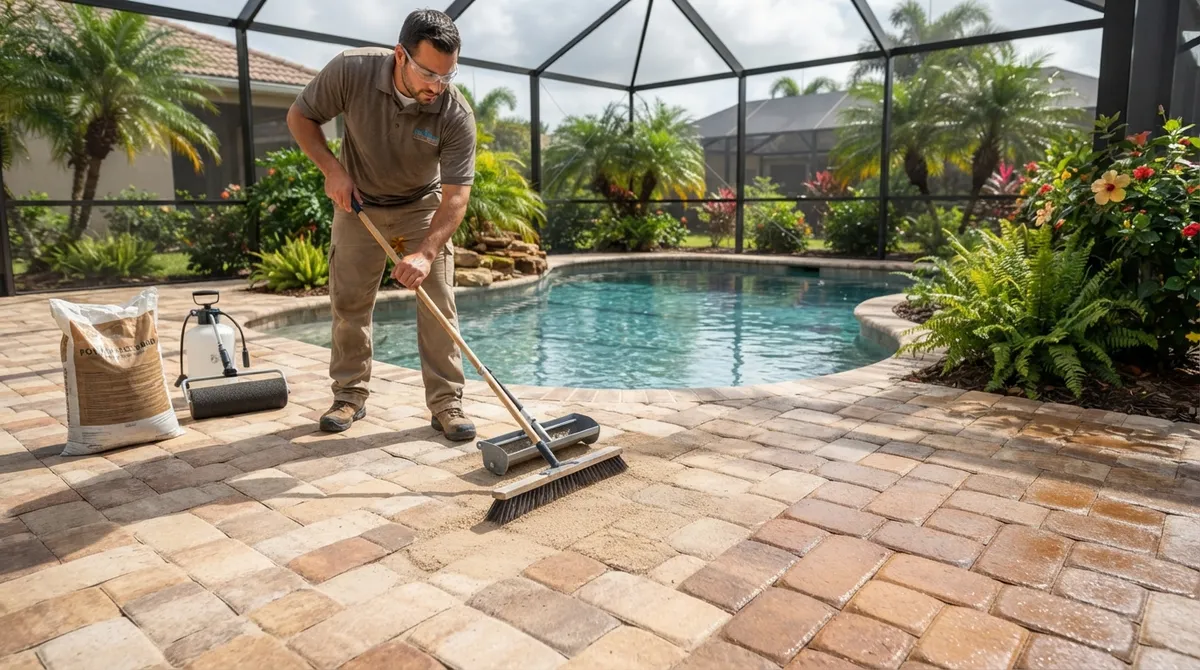
- Sand application: Polymeric sand is spread and worked into the joints
- Sealing: A quality sealant is applied evenly across the entire surface
- Curing: The area is roped off or marked while the seal sets, usually 24 to 48 hours
This is a job that combines both technical know-how and the right equipment. It is not the kind of task most homeowners want to tackle themselves, especially with Florida’s unpredictable weather.
Why Pressure Washing Comes First
You cannot skip the cleaning step. Sealing over dirty or algae-covered pavers traps grime underneath the sealant, which can lead to discoloration and premature failure. That is why choosing the right cleaning method matters just as much as the sealing itself.
DIY vs. Professional Paver Sanding and Sealing
Some homeowners consider doing this project themselves. Here is an honest look at how it compares to hiring a pro.
| Factor | DIY Approach | Professional Service |
|---|---|---|
| Equipment needed | Rental pressure washer, sealant sprayer, sand spreader | Commercial-grade equipment included |
| Time required | A full weekend or more | Completed efficiently in one visit |
| Sealant quality | Store-bought options, inconsistent results | Professional-grade sealants with UV protection |
| Risk of damage | Higher risk of streaking or over-sanding | Trained technicians avoid common mistakes |
| Long-term results | May need redoing within a year | Lasts one to three years with proper care |
For busy homeowners and time-poor professionals, hiring a pro simply makes more sense. You save your weekend, avoid costly mistakes, and get a longer-lasting result. If you want to compare your options further, this breakdown of DIY vs. professional exterior cleaning covers even more ground.
How to Choose the Right Local Pro
Searching “paver sanding and sealing near me” brings up a lot of options. Here is how to narrow down the best choice for your home:
- Look for a company that specializes in exterior cleaning, not just general handyman work
- Ask about the type of sealant they use and whether it is rated for Florida climates
- Check reviews and photos of completed paver projects
- Confirm they offer both cleaning and sealing, not just one or the other
- Ask if they are familiar with HOA aesthetic requirements in your community
You can also read our guide on how to find reliable pressure washing services near you for more tips on vetting local providers before you commit.
Questions to Ask Before Hiring
Before booking a service, it helps to ask a few simple questions. This keeps expectations clear on both sides.
- Do you clean the pavers before sealing, or is that a separate charge?
- What type of sand and sealant do you use?
- How long will the pavers need to stay off-limits after the job?
- Do you offer a warranty or guarantee on the work?
- Can you provide references from other Hillsborough County homeowners?
A trustworthy company will answer these questions clearly and confidently. If you get vague answers, it may be worth continuing your search.
Protecting Your Investment for the Long Run
Paver sanding and sealing is not a one-time fix. It is part of an ongoing maintenance routine that keeps your outdoor space looking sharp. Affluent homeowners in high-value neighborhoods especially benefit from staying proactive, since well-maintained hardscaping directly supports property value.
Here are a few simple habits that help pavers last longer between professional services:
- Sweep away leaves and debris regularly to prevent staining
- Rinse off spills quickly, especially oil or fertilizer
- Avoid using harsh chemical cleaners between professional visits
- Schedule a maintenance driveway and concrete cleaning at least once a year
- Watch for early signs of joint sand erosion after heavy storms
Eco-conscious homeowners will be glad to know that many professional sealing products today are low-VOC and safe for surrounding landscaping. Pairing this with a soft wash approach for delicate areas keeps your whole property healthy, not just your pavers.
Why Choose Buckhorn Power Wash
At Buckhorn Power Wash, we understand what Hillsborough County homes need to stay beautiful year-round. Our team combines careful pressure washing techniques with attention to detail that protects your pavers instead of damaging them. We proudly serve homeowners in Tampa, Brandon, Valrico, Riverview, Lithia, and surrounding communities.
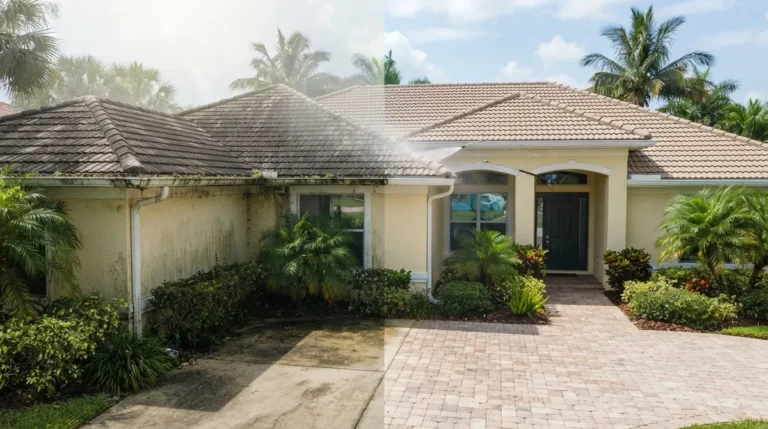
We know your time matters. That is why we offer an easy online quoting tool that gives you a price in minutes, without needing a home visit. You can also check out our before-and-after gallery to see the kind of results we deliver every day. Curious what our neighbors are saying? Take a look at Visit us on Google — Buckhorn Power Wash to see real feedback from local homeowners.
You can also find us on Facebook for recent project photos, and read honest customer experiences on Yelp. According to the U.S. Environmental Protection Agency, well-maintained permeable pavement surfaces also help manage stormwater runoff more effectively, which is another reason to keep your pavers in good shape.
Final Thoughts on Finding Paver Sanding and Sealing Near Me
Your pavers work hard every day, handling foot traffic, cars, sun, and rain without complaint. Giving them a little attention through professional sanding and sealing keeps them strong, stable, and beautiful for years to come. It is a small investment that pays off in curb appeal, property value, and peace of mind.
If you are ready to stop searching and start restoring, our team is here to help. Request your free quote today or call us to talk with a friendly member of our team about your paver project. We look forward to helping your Hillsborough County home look its very best.
FAQs
Q: How often should I get paver sanding and sealing near me done?
A: Most Hillsborough County homes need resealing every one to three years, depending on sun exposure and foot traffic. Pool decks and driveways with heavy use may need it more often. A quick inspection can tell you exactly where your pavers stand.
Q: Can I pressure wash my pavers before sealing myself?
A: You can try, but it is easy to use too much pressure and damage the joints or push sand out unevenly. Professional equipment and technique protect the pavers while still getting them fully clean. It is worth leaving this step to the pros for the best results.
Q: What happens if I skip sealing after cleaning my pavers?
A: Without sealant, your pavers are left exposed to sun, rain, and stains, which speeds up fading and erosion. Weeds and ants can also creep back into the joints much faster. Sealing locks in the clean look and adds real protection.
Q: Does paver sanding and sealing help with HOA compliance?
A: Absolutely! Many HOA communities in Hillsborough County have strict standards for driveway and walkway appearance. Fresh sand and sealant keep your pavers looking sharp and help you avoid those pesky violation notices.
Q: How long does the sealant need to cure before I can walk on it?
A: Most sealants need about 24 to 48 hours to fully cure, depending on humidity and temperature. Your technician will let you know the exact timeline for your specific project. It is best to keep foot and vehicle traffic off the area during this window.