Key Takeaways
-
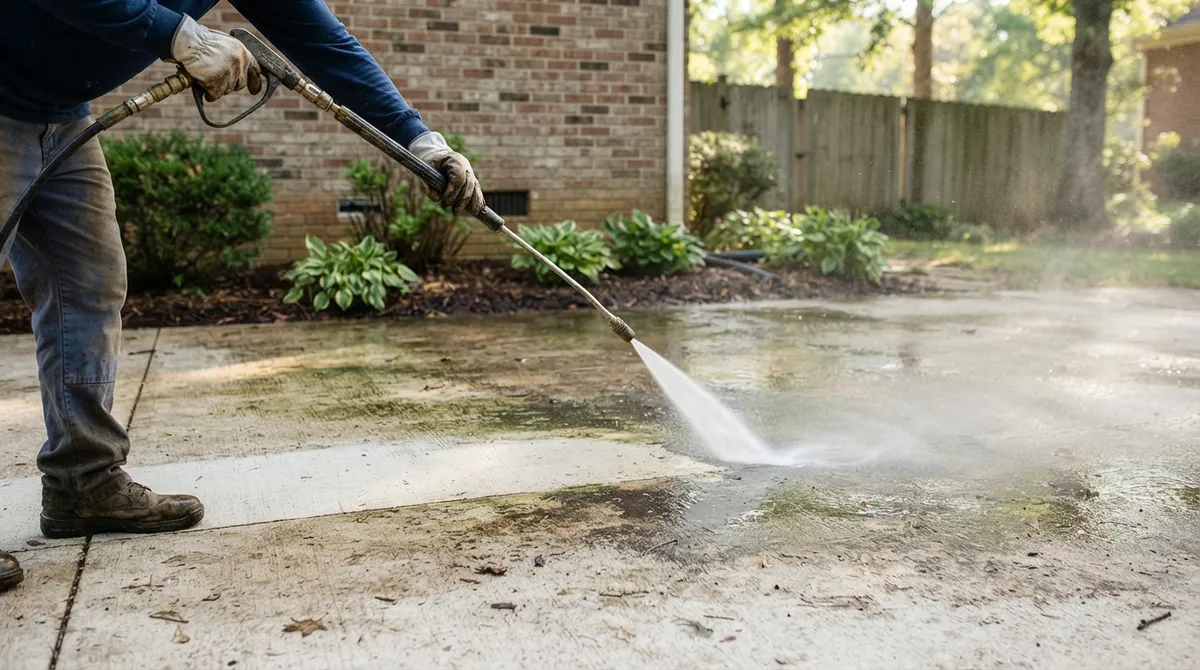
Use 3,000 to 3,500 PSI with a 15-25 degree nozzle tip held 12-18 inches from the surface to clean concrete without etching or damaging the top layer.
-
Pre-treat tough stains like oil, rust, and algae with appropriate degreasers or concrete cleaners 5-10 minutes before pressure washing for significantly better results.
-
Always work from the highest point downward in slow, overlapping straight-line passes to let gravity carry dirty water away and prevent streaking or zebra-stripe patterns.
-
Clear the area completely and sweep loose debris first to avoid pushing mud around and wasting effort; skip prep work and you risk damaged concrete or wasted time.
-
Schedule professional cleaning every 6-12 months in Florida's humid climate to prevent algae, mold, and organic growth from permanently etching into concrete over time.
-
Holding the nozzle too close, using turbo nozzles without experience, or cleaning in direct sunlight are common mistakes that cause permanent etching, gouges, and damage requiring costly repairs.
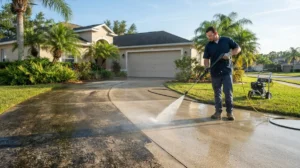
Your driveway takes a beating all year long. Between Florida rain, oak pollen, tire marks, and that green algae film that loves our humidity, concrete gets dirty fast. If you have ever grabbed a rental pressure washer and gone to town on your driveway, you know it can go sideways quickly. Streaky lines, etched concrete, or a sore back are not what you signed up for. That is why we put together these pressure washing tips concrete owners in Hillsborough County actually need, whether you plan to DIY this weekend or hand the job to a pro.
Here at Buckhorn Power Wash, we clean driveways, walkways, and patios across Tampa, Brandon, Valrico, Riverview, and Lithia every single week. We have seen what works and what wrecks a perfectly good slab. This guide breaks down the safest, smartest way to get that clean look without damaging your concrete or wasting your Saturday.
Why Concrete Gets So Dirty in Hillsborough County
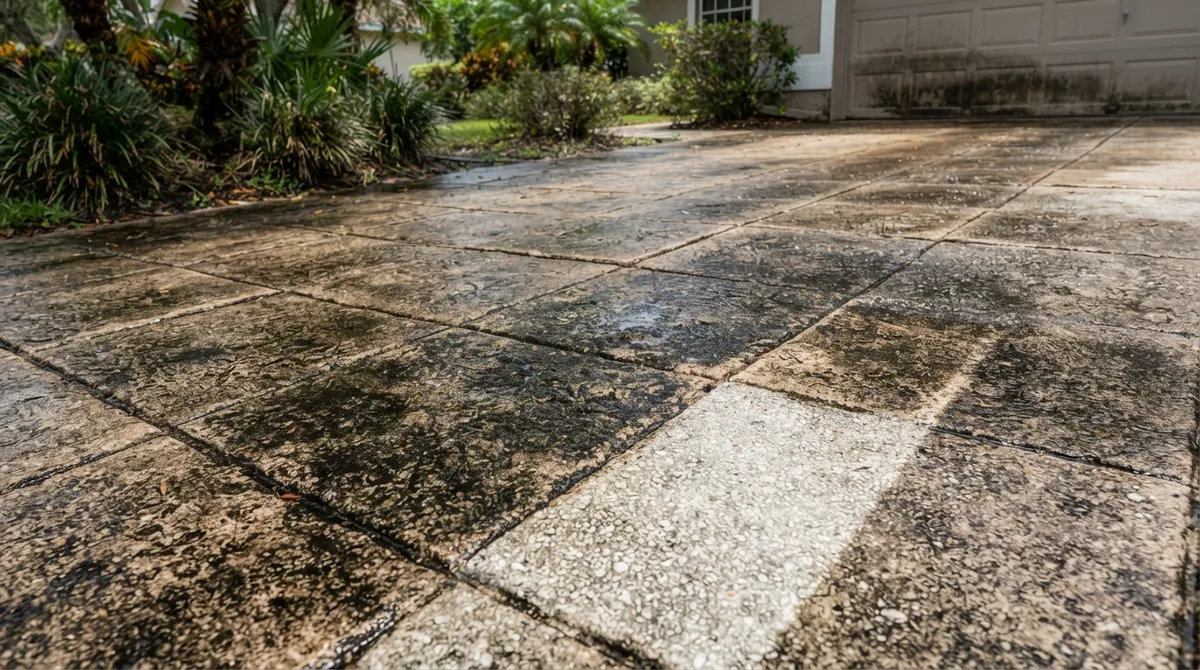
Florida’s warm, wet climate is basically a five-star resort for mold, mildew, and algae. Add in humidity, shade from live oaks, and afternoon storms, and your driveway becomes the perfect breeding ground for green and black stains. Understanding why concrete gets dirty helps you clean it smarter, not harder.
- High humidity feeds algae and mold growth year-round
- Oak trees drop pollen, sap, and tannin stains that soak into pores
- Sprinkler overspray creates damp spots where mildew thrives
- Car fluids like oil and transmission fluid leave dark blotches
- Rust from patio furniture or sprinkler heads etches orange rings
If you want a deeper look at how organic growth spreads across exterior surfaces, our article on how to remove algae from your home’s exterior surfaces covers the science in simple terms.
Pressure Washing Tips Concrete Owners Should Know Before Starting
Before you even turn on the machine, a little prep work saves you a lot of grief. Skipping these steps is the number one reason DIY jobs turn into damaged concrete or wasted afternoons.
1. Clear the Area Completely
Move cars, bikes, potted plants, and patio furniture off the surface. Anything left behind can get soaked with dirty runoff or knocked over by the spray.
2. Sweep Away Loose Debris
Leaves, sand, and loose dirt should be swept first. This keeps your pressure washer from just pushing mud around instead of actually cleaning.
3. Pre-Treat Tough Stains
Oil stains, rust spots, and heavy algae patches usually need a degreaser or concrete cleaner applied ahead of time. Let it sit for the time listed on the label before rinsing.
4. Check the Weather
Pick a dry day without wind. Overspray can drift onto siding, cars, or your neighbor’s yard, and rain right after cleaning can wash away your cleaning solution before it works.
Choosing the Right Pressure Washer Settings
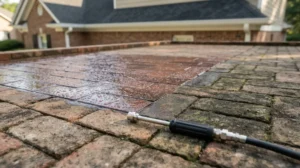
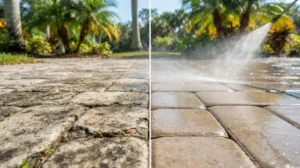
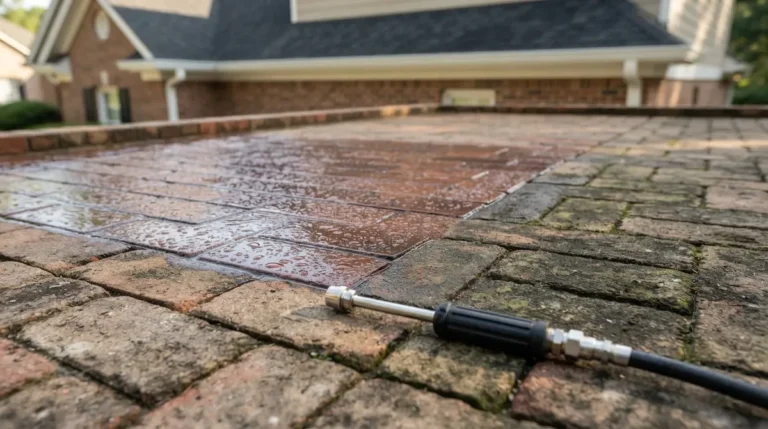
This is where most DIY jobs go wrong. Too much pressure can etch lines into your concrete or blast away the top layer entirely, leaving permanent marks that no amount of cleaning can fix.
| Setting | Recommended Range | Why It Matters |
|---|---|---|
| PSI (Pressure) | 3,000 to 3,500 PSI | Strong enough to clean concrete without etching |
| Nozzle Tip | 15 or 25 degree | Wider spray reduces streaking and stripe marks |
| Distance from Surface | 12 to 18 inches | Keeps pressure even and prevents gouging |
| Spray Pattern | Slow, overlapping passes | Avoids uneven cleaning and zebra stripes |
If those numbers feel intimidating, you are not alone. Many homeowners find it easier and safer to bring in professionals who already know the right pressure for every surface. Our team walks through this in detail on our Driveway & Concrete Cleaning service page.
Step-by-Step: How to Pressure Wash a Concrete Driveway
Once you have the right equipment and settings dialed in, follow this simple sequence for the best results.
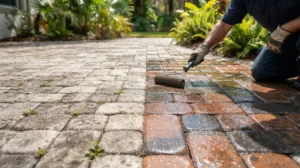
- Wet the entire surface first with a light rinse to loosen surface dirt
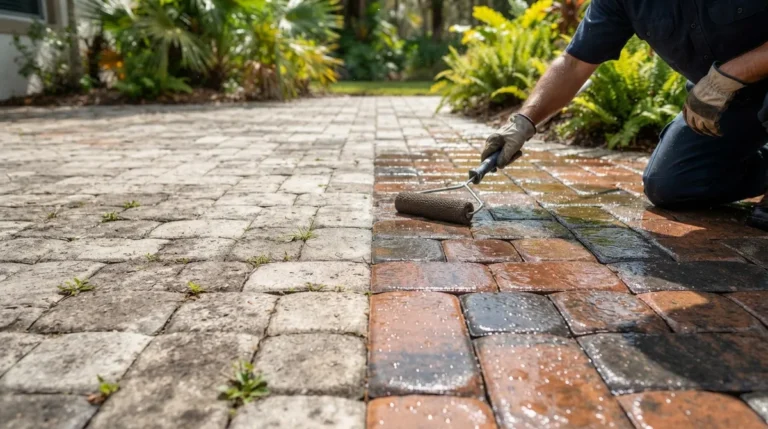
- Apply a concrete-safe cleaning solution and let it dwell for 5-10 minutes
- Scrub stubborn spots with a stiff bristle brush if needed
- Start pressure washing at the highest point of the driveway, working downhill
- Use slow, overlapping passes in straight lines to avoid streaks
- Rinse thoroughly to remove all cleaning residue and loosened grime
- Let the concrete air dry completely before moving furniture or parking cars back
Working from the highest point down lets gravity help carry dirty water away instead of pooling it in low spots. This one trick makes a noticeable difference in the final look.
Common Mistakes That Damage Concrete
We get calls every year from homeowners trying to fix damage from a rushed DIY job. Here are the mistakes we see most often.
- Holding the nozzle too close, which etches lines into the surface
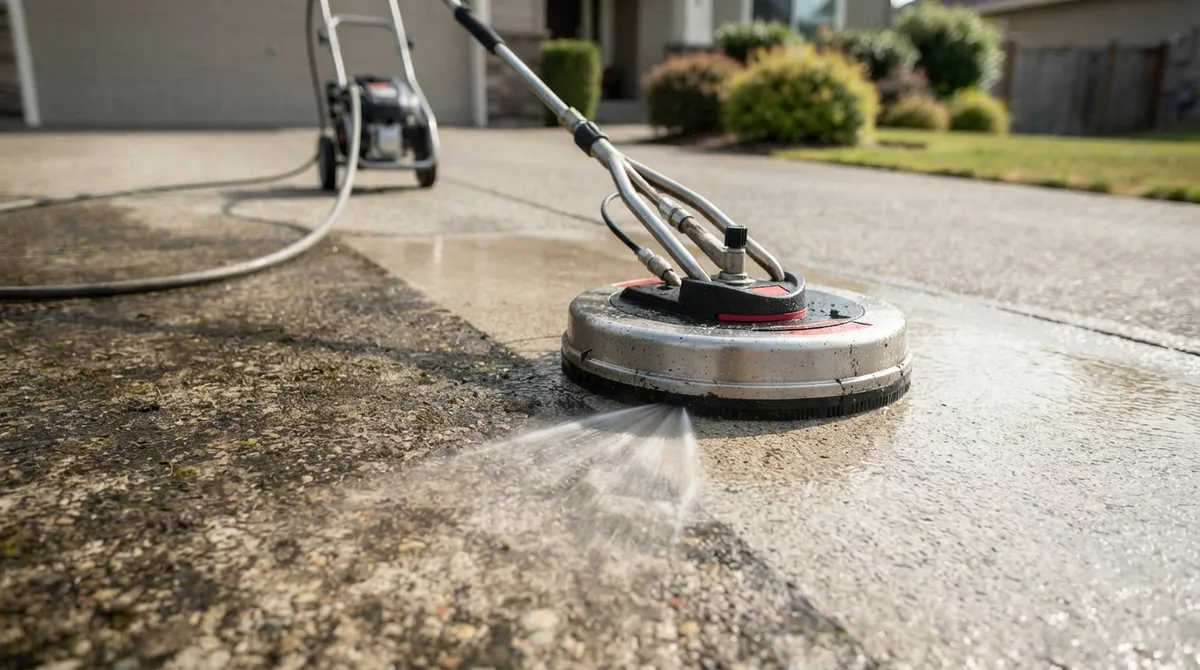
- Using a rotating turbo nozzle without experience, causing gouges
- Skipping the pre-treatment step on oil and rust stains
- Cleaning in direct sunlight, which dries solution too fast to work
- Ignoring cracks that let water seep underneath and cause more damage
- Ignoring landscaping and delicate plants nearby that get soaked with chemicals
For a closer look at these specific errors, check out our full breakdown of mistakes to avoid when using a power washer to clean concrete. It pairs nicely with our guide on how to clean concrete with a pressure washer the right way if you want even more detail.
DIY vs Hiring a Professional: What Makes Sense for You
We get it, DIY can feel satisfying. But concrete cleaning is one of those jobs where a small mistake can cost you hundreds in repairs. Here is a simple comparison to help you decide.
| Factor | DIY Approach | Professional Service |
|---|---|---|
| Equipment Needed | Rental or purchase required | Commercial-grade tools included |
| Time Commitment | 3-6 hours depending on size | Usually completed same day |
| Risk of Damage | Higher without experience | Low, handled by trained techs |
| Cleaning Solutions | Trial and error | Proven, surface-safe formulas |
| Physical Effort | High, hard on your back | None, we do the heavy lifting |
For busy homeowners and working professionals who would rather spend the weekend with family, our article on DIY vs professional exterior cleaning dives deeper into this comparison.
Keeping HOA Standards Happy
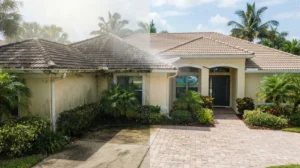
If you live in an HOA community, you already know how strict the rules can be about driveway appearance. Stained or moldy concrete can trigger warning letters or fines faster than you’d think. Regular cleaning keeps your property looking sharp and your HOA off your back.
- Schedule cleanings every 6 to 12 months to stay ahead of algae buildup
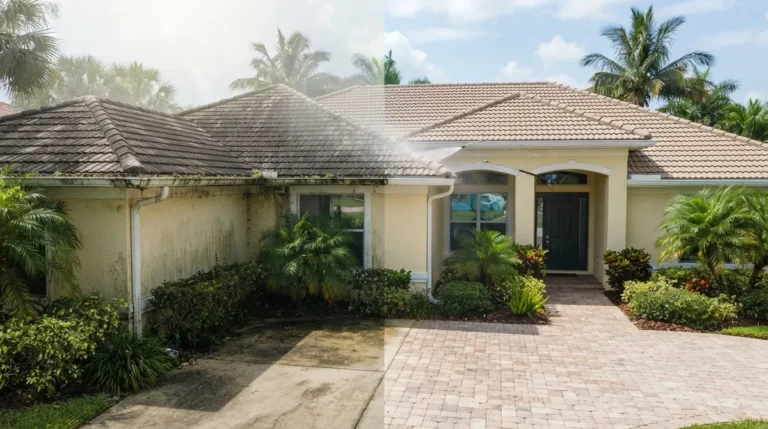
- Keep before-and-after photos in case an HOA dispute ever comes up
- Pair driveway cleaning with house washing for a complete curb appeal refresh
- Ask about combined packages that include roof and gutter cleaning too
Protecting Your Investment for the Long Haul
For affluent homeowners with high-value properties, concrete cleaning is about more than looks. It protects your investment. Stains and organic growth can eat into concrete over time, leading to cracks and costly repairs down the road. Sealing your driveway after a professional clean adds another layer of protection against Florida’s harsh sun and rain cycles.
Curious how professional-grade cleaning compares to a garden hose attachment? Our piece on what makes professional pressure washing services worth it explains exactly what you’re paying for and why it matters.
Eco-Friendly Concrete Cleaning Options
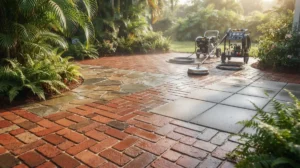
If you’re mindful of water usage and chemical runoff, you’ll be glad to know that modern pressure washing has come a long way. Low-water techniques and biodegradable detergents can clean just as effectively without harming your lawn, garden, or local waterways.
- Ask your provider about eco-friendly, biodegradable cleaning solutions
- Request soft washing for delicate areas near landscaping
- Choose a company that captures and properly disposes of wastewater
- Look for services that use only the water needed, not excess runoff
Our team follows environmentally responsible practices on every job, which is one reason so many eco-conscious homeowners in Hillsborough County trust us. You can see examples of our finished work in our gallery.
What to Expect When You Hire Buckhorn Power Wash
We built our process around convenience and trust. From the first call to the final rinse, our goal is a spotless driveway and zero stress for you.
- Instant online quotes without needing an in-home visit
- Trained technicians who understand concrete, brick, and pavers
- Eco-conscious cleaning solutions safe for landscaping and pets
- Flexible scheduling that works around your busy week
- Service across Tampa, Brandon, Valrico, Riverview, and Lithia
Want to see what your neighbors are saying? Check out our reviews on Yelp or follow our latest projects on Facebook. You can also visit us on Google — Buckhorn Power Wash to see photos and read what local homeowners think of our work.
For homeowners managing multiple properties or looking for trusted local service providers in other categories, resources like InCare can also be a helpful place to find vetted professionals for your household needs.
When to Call in the Pros
Some jobs really are best left to professionals, especially if you notice any of these warning signs.
- Deep, dark stains that won’t budge with basic cleaners
- Cracked or damaged concrete that needs careful handling
- Large driveways or multiple surfaces needing attention
- No time or equipment to tackle the job safely yourself
- HOA deadlines approaching fast
If any of these sound familiar, it might be time to bring in help. Learn more about spotting these warning signs in our article, 7 signs you need a pressure washing company near me today.
Final Thoughts on Keeping Your Concrete Spotless
Clean concrete does more than boost curb appeal. It protects your property value, keeps your HOA happy, and gives you one less thing to worry about on your weekend to-do list. Whether you tackle it yourself with the right pressure, nozzle, and technique, or you decide to leave it to the experts, the key is doing it safely and consistently.
If all this talk of PSI settings and nozzle angles sounds like more trouble than it’s worth, we’re happy to take it off your plate. Ready for a spotless driveway without lifting a finger? Request Your Free Quote today, or feel free to call us to talk through your project. Your driveway (and your Saturday) will thank you.
FAQs
Q: What PSI is safest for pressure washing concrete driveways?
A: Somewhere between 3,000 and 3,500 PSI works great for most concrete driveways. Anything higher risks etching the surface, so it’s always better to start lower and work your way up if needed.
Q: How often should I pressure wash my concrete driveway?
A: Most Hillsborough County homes do well with a cleaning every 6 to 12 months. If you’re in an HOA or have lots of shade and moisture, you might want to bump that up to twice a year.
Q: Can pressure washing damage my concrete?
A: It sure can if the pressure is too high or the nozzle gets held too close. That’s why we always recommend either using a wide nozzle at a safe distance or letting a trained pro handle it for you.
Q: Is it better to hire a professional or rent a pressure washer myself?
A: If you’re short on time or nervous about damaging your driveway, hiring a pro is the way to go. We bring the right equipment, safe cleaning solutions, and experience so you get great results without the risk.
Q: What cleaning solutions work best on concrete stains?
A: Degreasers work great on oil stains, while algae and mold respond well to eco-friendly, biodegradable cleaners. Letting the solution sit for a few minutes before rinsing makes a huge difference in results.