Key Takeaways
-
Use oxygen bleach mixed with water for algae and mold, baking soda with dish soap for oil stains, and white vinegar for rust—these household items are budget-friendly and work well for light to moderate concrete stains.
-
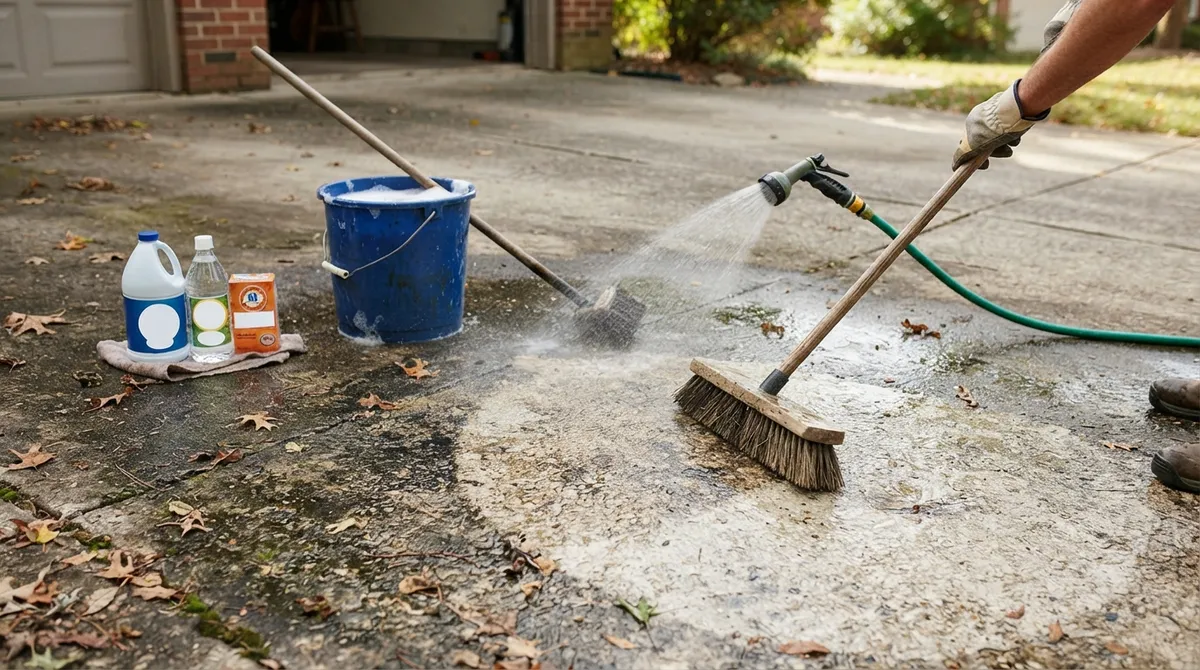
Apply cleaning solution, let it sit 10-15 minutes, then scrub in circular motions with a stiff-bristled broom or handheld brush, followed by thorough rinsing with a garden hose spray nozzle for effective DIY cleaning.
-
Sweep loose debris first, choose the right cleaning solution based on stain type (algae, rust, oil, or general grime), and repeat treatments 2-3 times for stubborn stains that have soaked into concrete pores.
-
Schedule professional pressure washing every 6-12 months combined with weekly sweeping and spot-treating fresh stains for optimal maintenance, as DIY methods work best for light upkeep between professional cleanings.
-
Call professionals when stains return within weeks, algae covers large areas, you've spent hours with little improvement, or when dealing with slippery mossy surfaces that pose safety risks.
-
Use eco-friendly methods like biodegradable cleaners and oxygen-based bleach instead of chlorine, direct runoff away from storm drains, and avoid dumping chemicals near plants to protect local waterways.
Life gets busy. Between work, kids, and trying to squeeze in a weekend nap, your driveway probably isn’t top of mind. But then you glance outside and notice those dark streaks creeping across your concrete. If you don’t own a pressure washer, don’t worry. You can still clean concrete without a pressure washer using a few simple tools and some elbow grease. This guide will walk you through easy DIY methods to keep your driveway, walkway, or patio looking decent between professional cleanings.
We’ll also chat about why these DIY tricks only go so far, and when it’s smart to call in the pros at Buckhorn Power Wash. As a trusted name in Hillsborough County, we know concrete surfaces here take a beating from Florida humidity, algae, and pollen. Let’s get your concrete looking fresh again.
Why Concrete Gets Dirty So Fast in Hillsborough County
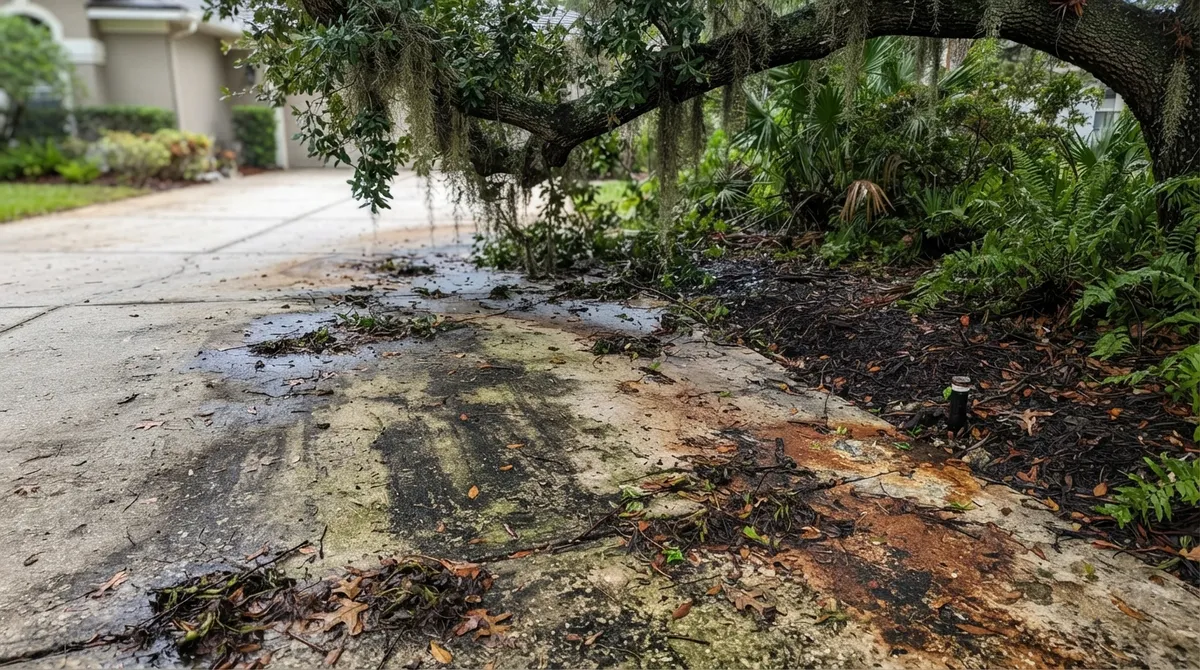
Florida’s warm, wet climate is basically a playground for algae, mold, and mildew. Add in oak tree pollen, oil drips, and rust from lawn furniture, and your concrete never gets a break. Homeowners in Valrico, Riverview, Brandon, and Tampa deal with this constantly.
Here’s what typically causes those stubborn stains:
- Algae and mold growth from humidity and shade
- Rust stains from patio furniture or sprinklers
- Oil and grease drips from vehicles
- Tree sap and pollen buildup
- Everyday dirt and foot traffic grime
Knowing what you’re up against helps you pick the right cleaning method. Let’s break down how to tackle each one without renting or buying a pressure washer.
How to Clean Concrete Without a Pressure Washer
You don’t need fancy equipment to make a real difference. Here’s a simple step-by-step process that works well for driveways, sidewalks, and patios.
Step 1: Clear the Area First
Sweep away loose debris, leaves, and dirt before you start. This keeps you from just pushing grime around in circles. A stiff-bristled broom works best for this first pass.
Step 2: Choose Your Cleaning Solution
You have a few options depending on what’s on your concrete. Here’s a quick comparison to help you decide.
| Stain Type | Best DIY Solution | How It Works |
|---|---|---|
| Algae or mold | Oxygen bleach + water | Breaks down organic growth safely |
| Rust stains | Lemon juice or vinegar | Acid dissolves rust particles |
| Oil or grease | Baking soda + dish soap | Absorbs and lifts oil residue |
| General grime | Dish soap + warm water | Cuts through everyday dirt |
| Tough dark stains | Trisodium phosphate (TSP) | Heavy-duty degreaser for old stains |
Step 3: Scrub With the Right Tools
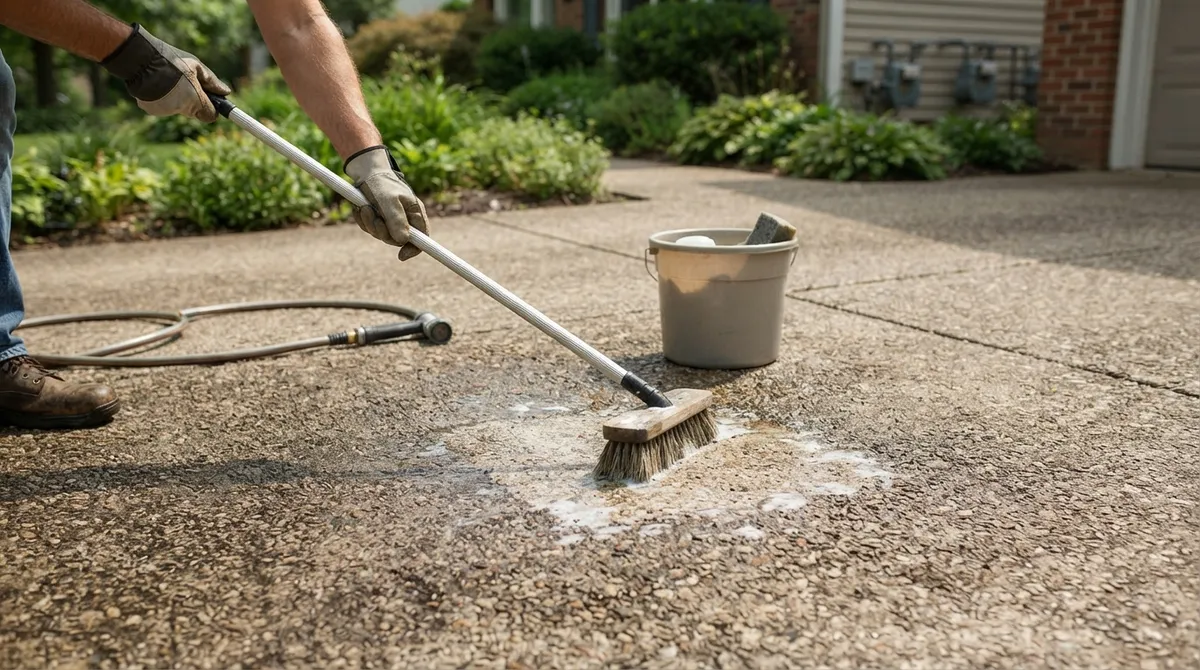
A stiff push broom or a long-handled scrub brush works great for larger areas. For smaller spots, a handheld scrub brush gives you more control. Apply your cleaning solution, let it sit for 10 to 15 minutes, then scrub in small circular motions.
Step 4: Rinse Thoroughly
Use a garden hose with a spray nozzle to rinse away the loosened dirt and cleaner. This won’t have the punch of a pressure washer, but it gets the job done for light to moderate grime.
Step 5: Repeat if Needed
Stubborn stains might need a second or third round. Patience is key here, especially with rust or old oil stains that have soaked into the concrete pores.
5 Household Items That Work Surprisingly Well
You probably already have most of these sitting in your pantry or garage. Here’s a quick numbered list of go-to household cleaners for concrete.
- Baking soda: Sprinkle on oil stains, let sit overnight, then scrub and rinse.
- White vinegar: Mix with water for a natural mold and mildew fighter.
- Dish soap: A few squirts in warm water cuts through everyday grime.
- Oxygen bleach: Safer than chlorine bleach and great for algae without harming nearby plants.
- Cornstarch: Absorbs fresh oil spills before they set into the concrete.
These options are budget-friendly and gentle enough for most residential concrete surfaces. Just remember they work best on lighter stains, not years of buildup.
Eco-Friendly Concrete Cleaning Tips
If you’re trying to keep chemicals away from your lawn, pets, and local waterways, there are greener options available. Many Hillsborough County homeowners are shifting toward these safer methods.
- Use plant-based or biodegradable cleaners instead of harsh chemicals
- Avoid dumping bleach near flower beds or grass
- Sweep away debris before rinsing to reduce water waste
- Choose oxygen-based cleaners over chlorine bleach when possible
- Direct runoff away from storm drains when rinsing
Eco-conscious cleaning doesn’t mean sacrificing results. It just means being a little more thoughtful about what goes down your driveway and into the ground.
When DIY Methods Just Don’t Cut It
Here’s the honest truth: scrubbing by hand works for light maintenance, but it has limits. Deep-set stains, thick algae, and years of grime often need more power than a garden hose and elbow grease can provide.
Here are signs it’s time to call a professional instead of grabbing another scrub brush:
- Stains keep coming back within weeks of cleaning
- Algae covers a large portion of your driveway or patio
- You’re spending hours scrubbing with little visible improvement
- Your HOA has flagged your property for exterior upkeep
- You’re dealing with slippery, mossy pool decks or walkways
If any of these sound familiar, it might be time to skip the bucket and brush. Our team explains more about this tradeoff in DIY vs. Professional Exterior Cleaning: Which Wins?.
Why Professional Pressure Washing Still Wins
DIY methods are great for upkeep between cleanings, but they can’t match what professional equipment delivers. Commercial-grade pressure washers use controlled water pressure that lifts embedded stains without damaging the concrete surface.
Here’s what sets professional cleaning apart from DIY scrubbing:
- Deeper clean: High-pressure water reaches into concrete pores that scrubbing can’t touch.
- Faster results: A driveway that might take you all weekend gets done in a fraction of the time.
- Safer for surfaces: Trained technicians know the right pressure settings to avoid etching or damage.
- Long-lasting results: Professional cleaning often keeps concrete looking fresh for months longer than DIY scrubbing.
- Protects property value: Clean concrete boosts curb appeal, which matters if you’re selling or just love a tidy home.
Our team walks through best practices in How to Clean Concrete with a Pressure Washer the Right Way, if you’re curious about the process itself.
Protecting Your Investment With Regular Maintenance
Whether you’re in a high-value neighborhood or a cozy HOA community, keeping your concrete clean protects your home’s appearance and value. Affluent homeowners in Hillsborough County often schedule seasonal cleanings to stay ahead of Florida’s humid climate and organic growth.
For HOA residents, staying compliant with community standards can mean the difference between a friendly reminder and a fine. Regular driveway and concrete cleaning keeps your property looking sharp without the stress of last-minute scrubbing sessions.
If you’d rather spend your Saturday relaxing than scrubbing on your hands and knees, professional service is worth considering. Many busy professionals and families find that hiring help frees up their weekends for the things they actually enjoy.
What to Expect From a Professional Concrete Cleaning
Curious what actually happens when you book a service? Here’s a simple breakdown of the typical process our technicians follow.
- Initial inspection of the concrete surface and identification of stain types
- Pre-treatment with appropriate cleaning solutions for algae, oil, or rust
- Controlled pressure washing using the right nozzle and PSI settings
- Rinse and final walkthrough to confirm results
- Optional sealing recommendations to protect concrete long-term
This process is quick, thorough, and far less exhausting than a weekend of DIY scrubbing. You can learn more about the full range of services on our Services page.
Combining DIY Upkeep With Professional Cleanings
The best approach for most homeowners is a mix of both. Light DIY cleaning between professional visits helps keep your concrete looking fresh year-round. Think of it like brushing your teeth daily but still visiting the dentist twice a year.
Here’s a simple maintenance rhythm that works well for most Hillsborough County homes:
- Sweep and rinse concrete weekly to prevent buildup
- Spot-treat fresh stains immediately with household cleaners
- Schedule professional pressure washing every 6 to 12 months
- Address algae or mold growth quickly before it spreads
- Consider sealing your concrete after a professional clean for extra protection
This balance keeps your home looking great without turning every weekend into a chore list. If you want to see real results from past projects, check out our Gallery for before-and-after transformations.
Getting Started With Buckhorn Power Wash
Buckhorn Power Wash has helped countless homeowners across Hillsborough County restore their driveways, patios, and walkways. Our approach combines effective techniques with a genuine focus on affordable, professional results. You can read more about our story on our About page.
We’re proud of the relationships we’ve built with local families, and we love hearing feedback from our community. Feel free to check out our Facebook page or browse reviews on Yelp to see what neighbors are saying. You can also see what our Buckhorn Power Wash customers say by visiting Visit us on Google — Buckhorn Power Wash.
According to the U.S. Environmental Protection Agency’s water resources guidance, minimizing chemical runoff and water waste during outdoor cleaning helps protect local waterways, something we take seriously with every job we do in Hillsborough County.
Ready for a Spotless Driveway Without the Sweat
Cleaning concrete without a pressure washer can absolutely work for light upkeep and small stains. But when you’re ready for a deep, lasting clean that actually saves you time, our team is here to help. Whether you’re in Valrico, Brandon, Riverview, or anywhere else in Hillsborough County, we bring professional-grade equipment and friendly service right to your driveway.
Ready to skip the scrubbing and get real results? Request Your Free Quote today, or feel free to call us and we’ll be happy to answer any questions. Your concrete deserves a fresh start, and we can’t wait to help you get there.
FAQs
Q: Can I really clean concrete well without a pressure washer?
A: Yes, you can definitely get good results with a stiff brush, the right cleaning solution, and a little patience. It works great for light dirt, mild stains, and regular upkeep between professional cleanings.
Q: What household items work best for cleaning concrete?
A: Baking soda, white vinegar, dish soap, and oxygen bleach are all fantastic options sitting right in your pantry. They handle everything from oil spots to mild algae without needing harsh chemicals.
Q: How often should I clean my concrete driveway?
A: A quick sweep and rinse weekly keeps things fresh, while a deeper professional clean every 6 to 12 months handles the stubborn stuff. Florida’s humidity means algae and mold grow fast, so staying consistent really pays off.
Q: When should I hire a professional instead of doing it myself?
A: If stains keep coming back, algae has taken over, or you’re just tired of scrubbing with little payoff, it’s time to call in help. Professional equipment reaches deep into concrete pores that DIY methods simply can’t match.
Q: Is DIY concrete cleaning safe for the environment?
A: It can be, especially if you stick with biodegradable soaps and oxygen-based cleaners instead of harsh chlorine bleach. Being mindful about runoff near storm drains and plants makes a big difference too.